
Fig. 1. St Aldate’s, looking north from the Plough Inn, 28 July 1904 (POX0107594; Minn Coll. Neg. 1/1)
8 April 2022
The Minn Collection in the Bodleian Library has long been recognised as a remarkable source of images of old Oxford, and Colin Judge published a fine selection in Oxford past and present: a pictorial record of the ancient City of Oxford (The Oxford Illustrated Press, 1970).
One typically striking image used by Judge showed a bustling St Aldate’s in 1904 with a single tramline for Oxford’s horse trams in the centre of the street. The view looking north from the Plough Inn near the corner of Floyd’s Row shows buildings drawn by J C Buckler in the 1820s (Fig. 1). All the properties beyond Floyd’s Row were demolished in the 1920s to widen the road and improve views of Tom Tower.
Fig. 1. St Aldate’s, looking north from the Plough Inn, 28 July 1904 (POX0107594; Minn Coll. Neg. 1/1)
Until now, the collection has only been fully accessible to researchers with the time to visit the Bodleian Library or Oxfordshire County Council’s Oxfordshire History Centre where prints of Minn photographs generously donated by the Bodleian are also available. With the Bodleian’s permission and funding from the Oxfordshire Family History Society, the set of well over 3,000 photographs at Oxfordshire History Centre has now been digitised and is available online for the first time, free to view by all on Picture Oxon
Completion of this project fulfils a long-held desire to make these images readily accessible to the general public, especially Oxford residents and those with Oxford ancestry, and indeed to anyone with an interest in how the city has evolved over the centuries.
James Henry Hall Minn (1870-1961), usually known as Henry or Harry, was born in Oxford, the eldest of nine children of James and Jane (née Osborne). Henry’s father was a watch- and clockmaker who was born in East Dereham, Norfolk, though his antecedents had London and Oxford connections. The Minn family lived at first in Paradise Square in St Ebbe’s before moving to a newly-built terraced house at 15 Leckford Road in North Oxford in 1873. Henry’s father was an early amateur photographer, and it is very likely that he took the photograph of the street in about 1880, showing the terrace on the right and building under way on the other side of the road (Fig. 2).
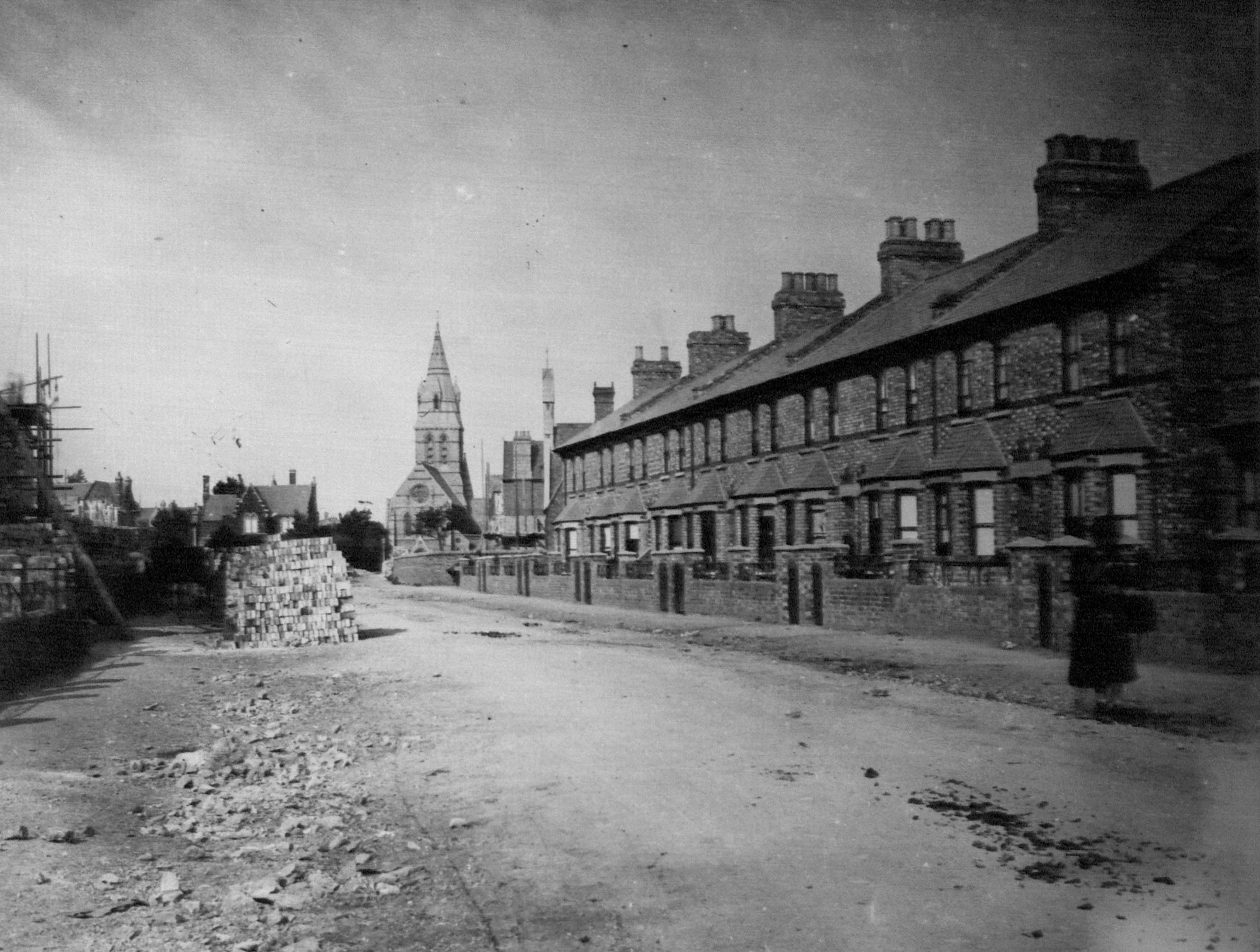
Fig. 2. Leckford Road looking east towards SS Philip and James’ Church, about 1880. (POX0104412; Minn Coll. Neg. 4/30)
All three of Henry’s brothers and three of his five sisters died in infancy, but he later recalled a happy childhood going to circuses and St Giles’s Fair, exploring the canal area around Lucy’s iron foundry, and playing in overgrown gravel pits north of his home before the area was developed. Henry Minn attended the nearby SS Philip and James’ School, but he was already assisting his father by the age of ten and he later followed his father’s trade as a watchmaker. The family moved to 104 Walton Street by 1891, and a photograph by the Oxford photographer Sarah Angelina Acland showing Henry Minn at his workbench was presumably taken there (Fig. 3).

Fig. 3. Henry Minn at his workbench in the 1890s. (Minn Coll. Neg. 170/5)
After the death of his father in 1905, Henry Minn went back to live in Leckford Road, this time at no. 10. He transferred the watchmaking business to 31 Woodstock Road which stood on the site of the 1930s entrance to Somerville College. His photograph of the road beyond St Aloysius' Presbytery shows the Waggon and Horses pub decorated for George V’s Coronation in 1911; no. 31 would have been behind the cyclist on the right (Fig. 4).
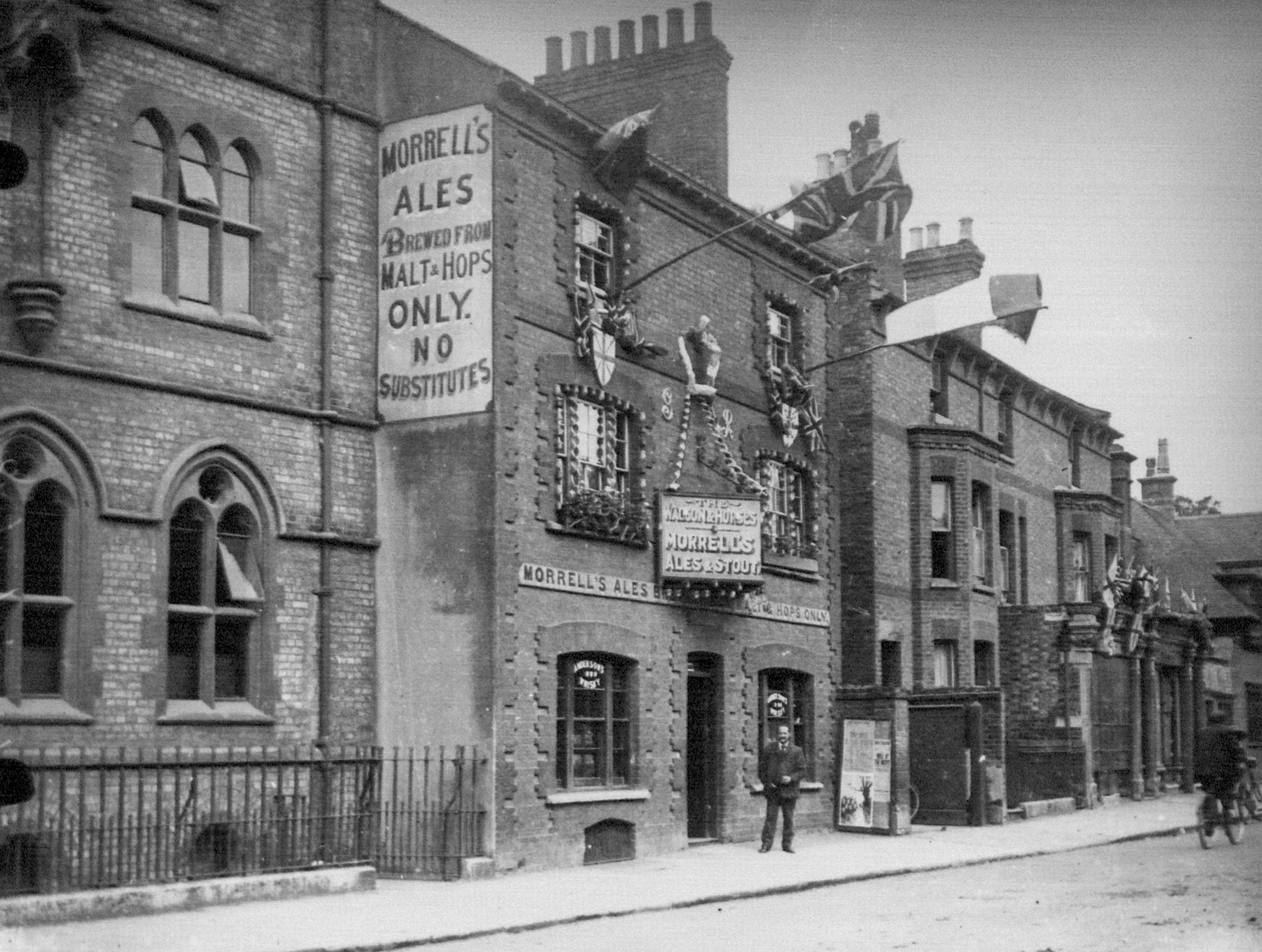
Fig. 4. The west side of Woodstock Road north of St Aloysius’ Church, 1911. (POX0109664; Minn Coll. Neg. 8/7)
Henry was too old for active service at the outbreak of war in 1914, and it is tempting to speculate that he then gave up his watchmaking business and joined Oxford University Press as an engineer so that he could contribute to the firm’s war work; he certainly served as a special constable during the war. Henry remained in post at OUP until 1927, and photographed a works outing leaving the Walton Street premises in 1925 (Fig. 5).

Fig. 5. Charabanc outing by Oxford University Press employees in Walton Street, 1925. (POX0149877; Minn Coll. Neg. 222e/11)
After sixty years in Oxford, Henry Minn retired to Cassington in about 1930, where he lived with his sister Alice at Old Manor House Farm until she died in 1952. He soon began researching the history of the village, and was appointed First Aid Officer in 1939 when Cassington made preparations for enemy air raids. Henry Minn continued to live at Old Manor House Farm until he died on 29 June 1961.
Unlike the better-known Henry Taunt (1842-1922), for whom photography was primarily a business, Henry Minn was an accomplished amateur photographer whose early interest in photography evolved into a personal mission to record Oxford’s historic and, in many cases, threatened sites and buildings. He carried on this work from the 1890s until the 1950s, complementing Taunt’s output for three decades before effectively becoming the famous photographer’s successor as recorder of the changing city. There is no evidence to suggest that Taunt and Minn ever compared notes, but Minn was certainly aware of the value of Taunt’s photographs, and purchased some negatives from him. They included a view of New Inn Hall Street in 1868 showing houses on the site where the new St. Peter le Bailey Church, now St. Peter’s College Chapel, was built in 1874 (Fig. 6)
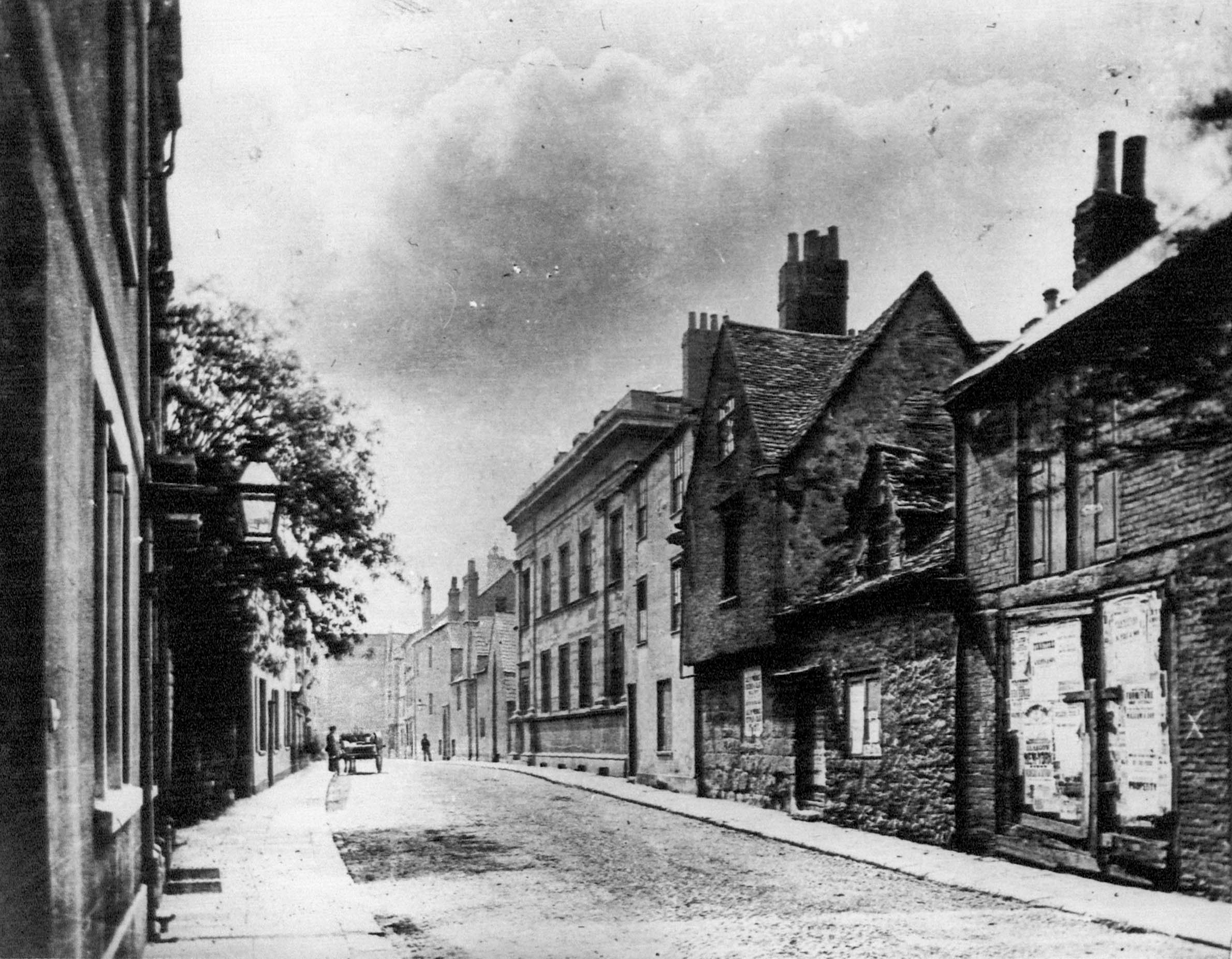
Fig. 6. New Inn Hall Street looking south towards Queen Street, a Taunt photograph taken in 1868. (POX0105394; Minn Coll. Neg. 165/3; Taunt 2144)
Henry Minn’s father, James, would have introduced him to photography at an early age, and he was a member of the Oxford Photographic Society by the age of twenty. After that society folded in 1893, Minn joined the Oxford Camera Club founded the following year. In about 1897, he worked with John Timms, a local dealer in magic lantern materials, on the first films ever made in Oxford, one showing the Summer Eights and the other showing employees leaving Oxford University Press. He became a personal friend of Sarah Angelina Acland (1849-1930), the Oxford photographer and pioneer of colour photography, and experimented with the new colour processes in the early 1900s. Minn was also interested in the history of photography, and after the death of Charles Dodgson, or Lewis Carroll, in 1898 he acquired some of Dodgson’s photographic equipment which he lent, and eventually bequeathed, to the Museum of the History of Science.
As a keen local historian and a member of the Oxford Camera Club, Minn was a prime mover of the celebrated Oxford Millenary Exhibition in 1912, supplying photographs from his personal collection and copying historic maps, prints and drawings for the illustrated version of the exhibition catalogue. One of these images was a copy of a watercolour by La Cave dated 1790 which shows the view towards New College from the Parks with people enjoying the Love Lane footpath which led to Holywell (Fig. 7).

Fig. 7. Love Lane and New College from the Parks, 1790 (POX0106809; Minn Coll. Neg. 10/19)
In 1935 Minn became an extra member of staff, or trusted volunteer, at the Bodleian Library, and a photograph by Peter Spokes, another Bodley volunteer, shows him at work in the Selden End of Duke Humfrey’s Library in 1959 (Fig. 8).
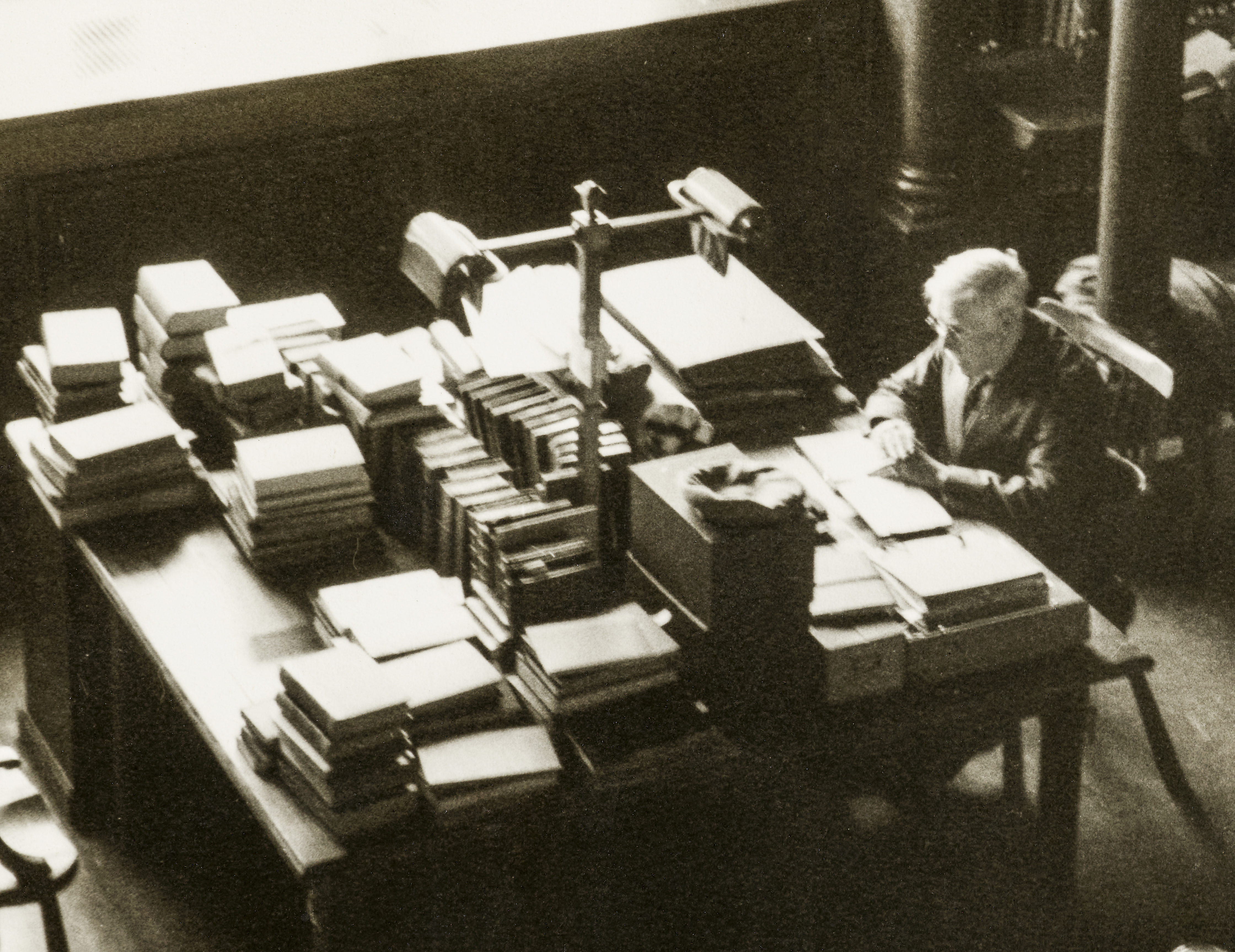
Fig. 8. Henry Minn at work in the Bodleian Library, 1959. (MS. Top. Oxon. d. 509)
Minn worked until the late 1950s on the library’s topographical collections, and he was largely responsible for the ‘Views [Card] Index’ of prints, drawings and photographs of Oxfordshire, Berkshire and Buckinghamshire which is now housed in the Weston Library. His regular commute between home and library was made much easier after 1936 when the Great Western Railway opened Cassington Halt on the Witney branch line. Minn was awarded an Honorary M.A. by the University of Oxford in 1938 for his services to the history of Oxford, and, on his death, he bequeathed his photographic and local history collections to the Bodleian Library.
The vast majority of Minn’s photographs cover the centre of Oxford, including the ancient suburbs as well as the area within the medieval town walls. He did photograph college buildings, and some of those images were used in published college histories, but he mainly concentrated on parts of the city where university and college expansion, commercial development, road widening, slum clearance and redevelopment were steadily eliminating streets, courts and yards, and demolishing many houses. His view of Wheatsheaf Yard off High Street is an early example of his work, taken in 1896 just before the old pub and neighbouring buildings were demolished (Fig. 9).

Fig. 9. Wheatsheaf Yard looking north towards High Street, 1896. (POX0103550; Minn Coll. Neg.16/39)
The threat of imminent clearances and progress on major developments caused Minn to pay regular visits over the years to some rapidly-changing streets. George Street was transformed between the 1880s and the 1930s, and Minn recorded the effects of that process west of New Inn Hall Street in 1911. St George’s Church, on the right, had been built in 1850, and was to be demolished, along with Lisemore’s Stores, in 1936 to make way for the Ritz, now the Odeon, Cinema. Further down the street, the Corn Exchange, Lucas’s clothing factory and the newly-built Co-op store had already made their mark by 1911 (Fig. 10).

Fig. 10. George Street, looking west from St George’s Church, February 1911. (POX0102874; Minn Coll. Neg. 3/12)
In Castle Street, the fine array of timber-framed houses drawn by J C Buckler in 1825 was being whittled away, and Minn’s view in 1908 shows the gap in the old frontage beyond the Queen’s Head pub caused by the Salvation Army Citadel built in 1888. On the right, the former Oxford Baths, a short-lived public wash house built in 1852, was being used as a store in 1908, but it was converted in 1910 to become Oxford’s first cinema, the Oxford Electric Theatre (Fig. 11).

Fig. 11. Castle Street, looking past the Queen’s Head pub towards Paradise Street, 10 September 1908. (POX0149521; Minn Coll. Neg. 5/14)
Minn also went off the beaten track to cover poorer districts which were generally regarded as unworthy, insanitary, and lacking in charm and distinction. There were clearly no potential profits for commercial photographers in these areas so Minn’s photographs are especially important and poignant. He was almost certainly the only person to photograph Waterloo Buildings, a group of early 19th century houses in Blackfriars Road which was about to be pulled down in 1914 (Fig. 12). Minn seems not to have enlisted people to enhance his images, but he did sometimes capture curious residents such as the three children with a bowl in this photograph.
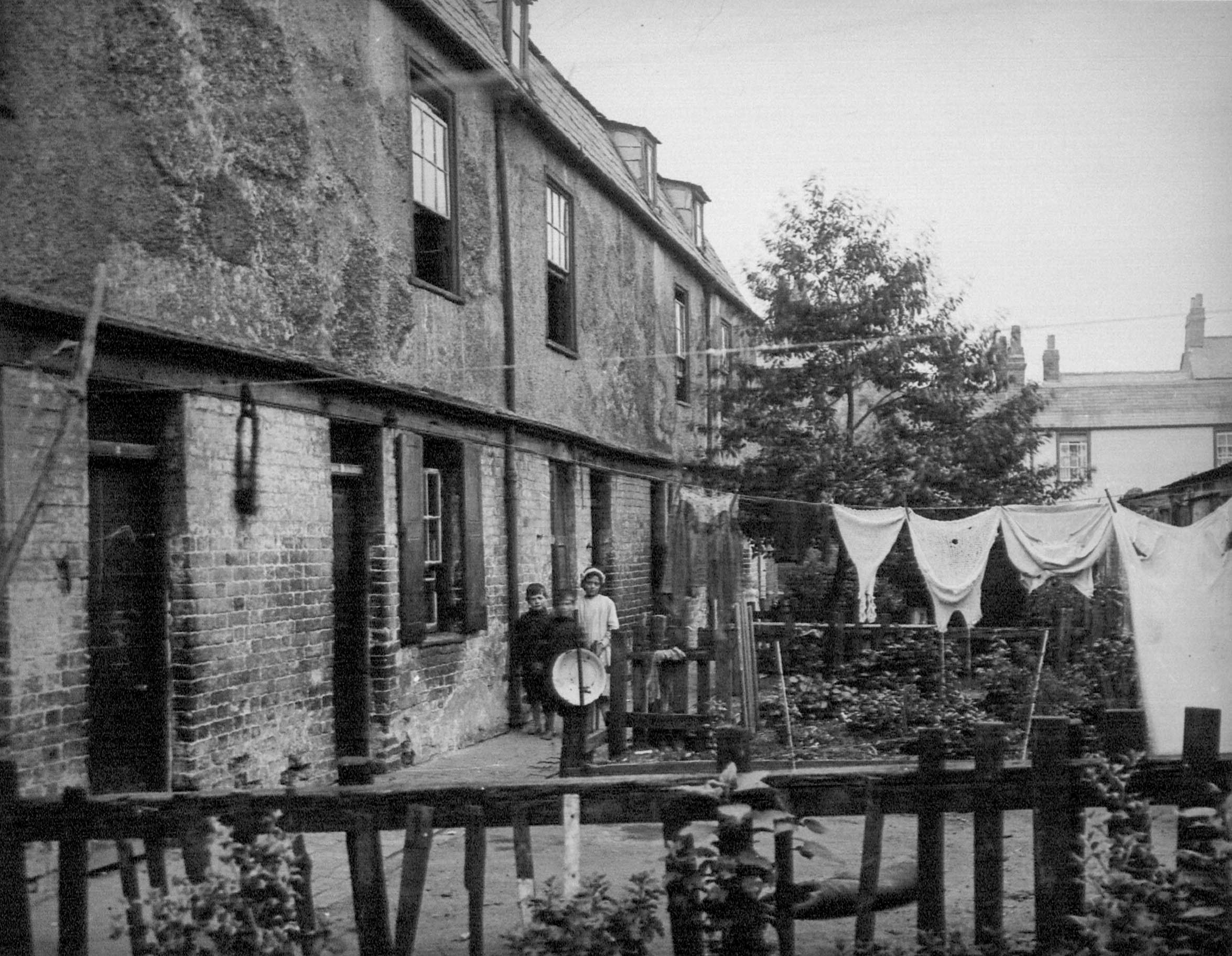
Fig. 12. Waterloo Buildings in Blackfriars Road, St Ebbe’s, 2 July 1914. (POX0110226; Minn Coll. Neg. 6/19)
Minn ventured less often beyond Magdalen Bridge, but the older parts of St. Clement’s were also changing, particularly during slum clearance in the 1930s, and he had fortunately recorded these cheerful children in Arthur Place, a small group of houses off Caroline Street, in 1914 (Fig. 13).
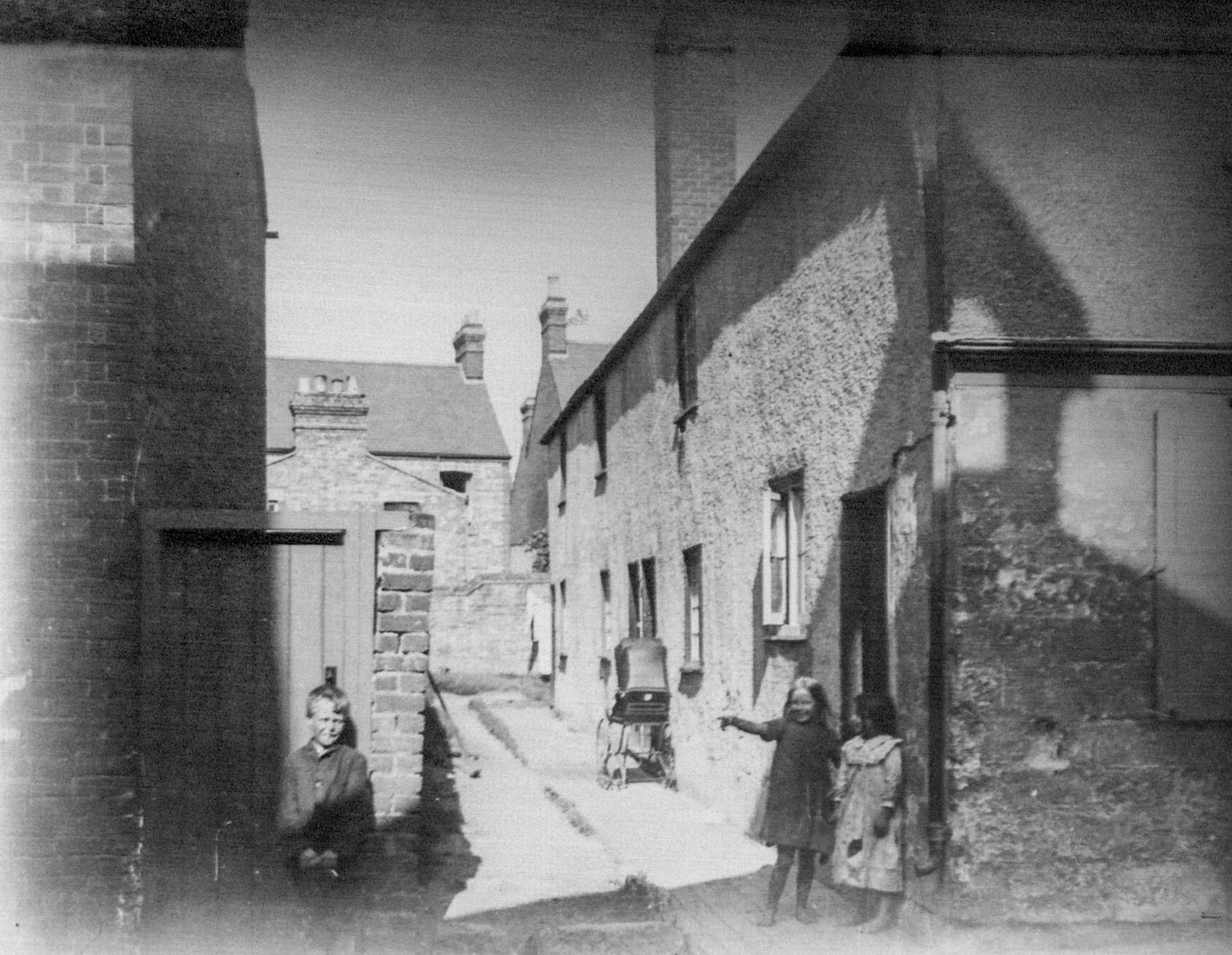
Fig. 13. Arthur Place, Caroline Street, St. Clements, 1914 (POX0108186; Minn Coll. Neg. 8/81)
As a resident of North Oxford who had seen the area develop since his childhood. Minn had a personal interest in plotting the continued growth of the suburb into the 20th century. One image in 1912, capturing a brief moment in the development of Summertown, shows Woodstock Road looking north towards the chimney of Wolvercote brickworks. The raised footpath on the left was part of the five-mile university walk up Banbury Road and back down Woodstock Road that is still remembered in the name Five Mile Drive; on the right, the Davenant Road street name plate had been erected, but no houses are visible (Fig. 14).

Fig. 14. Woodstock Road, Summertown, looking north from Davenant Road, August 1912. (POX0109632; Minn Coll. Neg. 4/14a)
Minn’s appetite for recording change did not diminish with age, and he noted for example the demolition of the Second World War air raid shelter outside Balliol College in Broad Street in 1946 (Fig. 15)
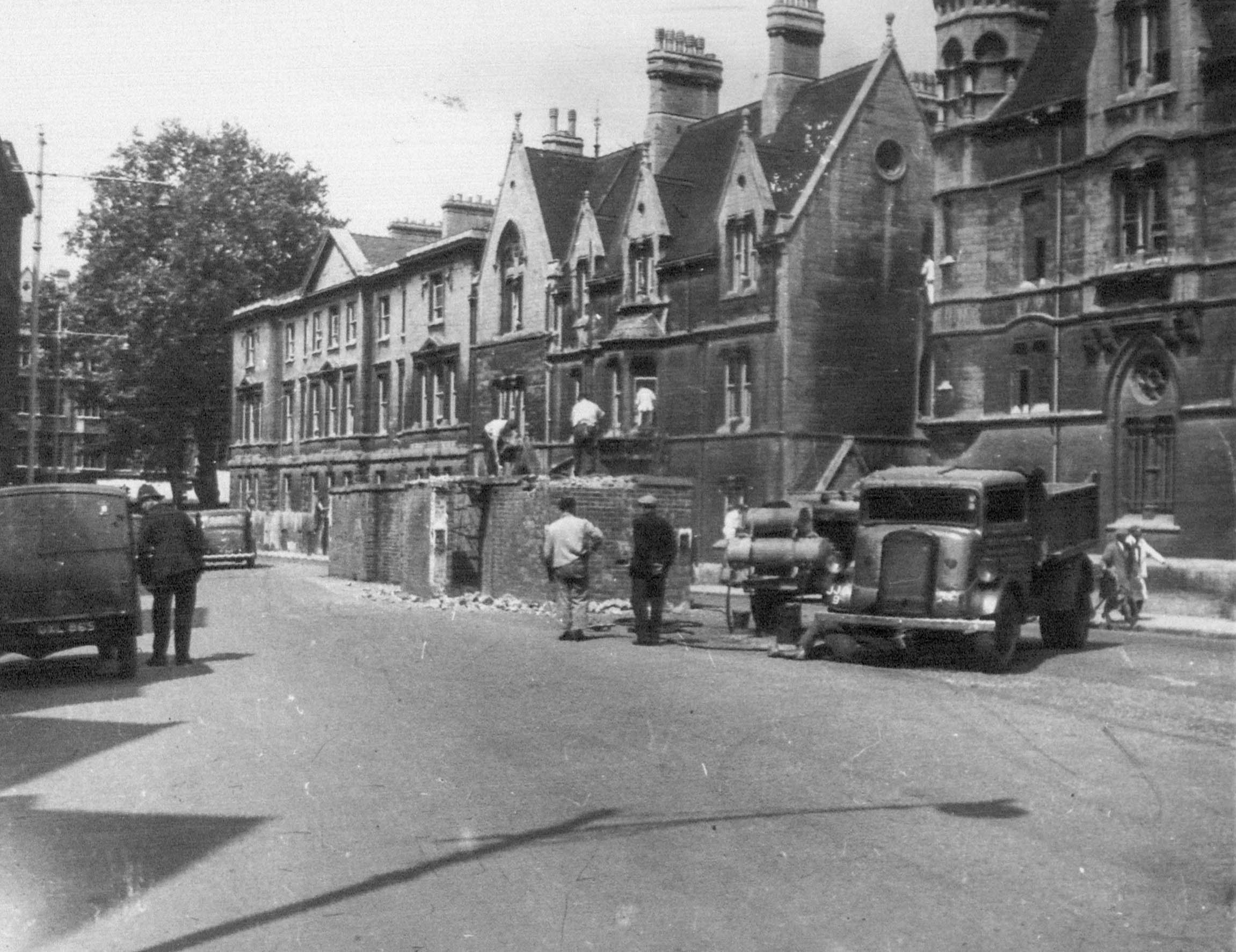
Fig. 15. Workmen demolishing the air raid shelter outside Balliol College, 13 June 1946. (POX0144997; Minn Coll. Neg. 30/3/12a)
This project has digitised all the Henry Minn prints donated to the Oxfordshire Local Studies Library that are now in the Oxfordshire History Centre. For various reasons, copies of some Minn photographs were not donated, and the Minn Collection in the Bodleian Library remains the definitive collection. You can also see there 21 albums which Minn created, using his own and other people’s photographs, together with prints, maps and ephemera.
The Minn albums cover the various areas of the city, as well as trams and buses, special constables and the village of Cassington (Bodl. MSS. Top. Oxon. d. 489-509, 512-13). The photographs in these albums have full captions, often with additional historical notices, plus Minn negative numbers (viz. ‘Minn. Coll. Neg.’). The album specifically devoted to the Millenary Exhibition (MS. Top. Oxon. d. 509), is essentially an interleaved copy of the catalogue which was seemingly on display at the exhibition, inviting personal reminiscences which supplement Minn’s own captions. Microfilm copies of these albums are at Oxfordshire History Centre (ref: MR2 - drawer 1).
The Minn Collection at the Bodleian also includes photographic plates of Sarah Angelina Acland (1849-1930) ref 1, ‘Angie’ being a personal friend and, like Minn, a member of the Oxford Camera Club; also included are some original plates of Henry Taunt (1842-1922) which Minn had purchased from the famous Oxford photographer. Sarah Angelina Acland's lantern slides and early colour photographic plates were given to the Museum of the History of Science in Oxford.
Posted by: Malcolm Graham and Colin Harris, Oxfordshire History Centre volunteers