
Portrait of Beatrice Vernon as a young lady
22 January 2021
Parts of Beatrice Vernon’s extensive photographic collection were first deposited with Oxfordshire History Centre in 2016, and images started to appear on Picture Oxon in 2017. Cataloguing and digitisation work is ongoing; meanwhile this blog post offers an exploration of and tribute to her life, travels, and amateur photographic work.
Portrait of Beatrice Vernon as a young lady
Although based in Oxford for most of her life, Beatrice Ellen Vernon was not a local lady. She had been born on the 25th October 1905 at Worle, in Somerset, the only child of Charles Percy Vernon and Florence Kate Habgood, who had been married on the 22nd of October 1904 in the Thornbury registration district of Gloucestershire.

POX0550023
'Mummie' (Florence Kate Vernon), 1935
The family appear to have moved about quite a bit during the early years of Beatrice’s life; in addition to Worle, various sources record them as living in Hammersmith, Whitchurch in Somerset, and by the time of the 1911 Census, at ‘The Highlands’, Symonds Yat, Ross-on-Wye, Herefordshire. By 1921 the family moved again; this time to Abwell Farm, in Vale of Berkeley, Gloucestershire, not too far north of the town of Berkeley, where Beatrice would be confirmed at St Mary’s Church on the 7th March 1922.
It was during the Abwell years that life-long love of photography first appeared. Beatrice Vernon’s diary from that time, The School Girl’s Diary and Note Book for 1921 published by Charles Letts, survives. Amidst the other details of what she did on Saturday, 16th April she records that she took a photograph. This is the first written record that we have of her doing this – she was fifteen years old. She had embarked on a pastime that she would enjoy until well on in years and when old age and infirmity called a reluctant halt. Although no longer surviving, her initial camera was probably a Kodak Box Brownie and her earliest photographs from this time includes one of labourers taking a break from haymaking at Abwell, and another of fishing boats going down the Severn at low tide.

Portrait of labourers taking a break from haymaking at Abwell, Gloucestershire, 1921
Also recorded at the end of her 1921 Diary are her meticulously kept accounts of what money she received and how she spent it – and a good deal was on film, which cost one shilling, and processing. Despite this, at the end of that year, her personal accounts show a surplus of income over expenditure of 2 shillings 5½ pence. In later life she would relate how, in those early days, she would do her own processing, using large china bowls to hold the various solutions required. Her diary entry for the 11th August 1921 records that she, “Picked apples. S[tella] down. Printed photos in evening and made albums.”
A number of photographs from the following year, 1922, introduce us to what would become another of her passions – of travelling to and visiting places of historic interest and scenic beauty. The expedition by, at the time, a posh motor car (possibly with driver complete with peaked cap), was to Tintern Abbey in Monmouthshire. It is a tribute to her expertise and skill that, after almost a century, her photographs are still as clear and crisp as the day that they emerged from her darkroom. The seriousness with which she embraced photography in all its aspects can perhaps be gleaned from the entry that she made in her diary on Tuesday, 16th May 1922. In the midst of a systematically carried out and recorded thorough spring clean of the Abwell farmhouse, on that day she recorded that she, “Cleaned developing room”.
At some time, probably in the mid-1920s, and for unknown reasons, the family left Abwell and moved to Oxford, which would be their home for the rest of their lives, possibly with a temporary sojourn of unknown duration in Cirencester along the way. (The Cheltenham Chronicle of the 20th August 1927 mentions a Mr. T. G. Neale as now being of Abwell Farm.)

POX0550517
345 Cowley Road, Oxford, March 1931.
The first Vernon family home in Oxford.
Their first Oxford Home was at 345 Cowley Road before moving to what Burke’s Landed Gentry would refer to as Beatrice Vernon’s estate – 45 Beech Croft Road – in 1936.

POX0550194
45 Beech Croft Road, Oxford.
The long term Vernon family home, dressed to celebrate the 1937 coronation.
By this time Beatrice Vernon would almost certainly have begun another of her long associations, that with the Oxford firm of Walford and Spokes, jewellers and antique dealers. At that time, they had two shops in Oxford: one at 86 and 87 High Street, opposite The Queen’s College; the other, opened in 1935, at 14 Magdalen Street, opposite St Mary Magdalen's Church.
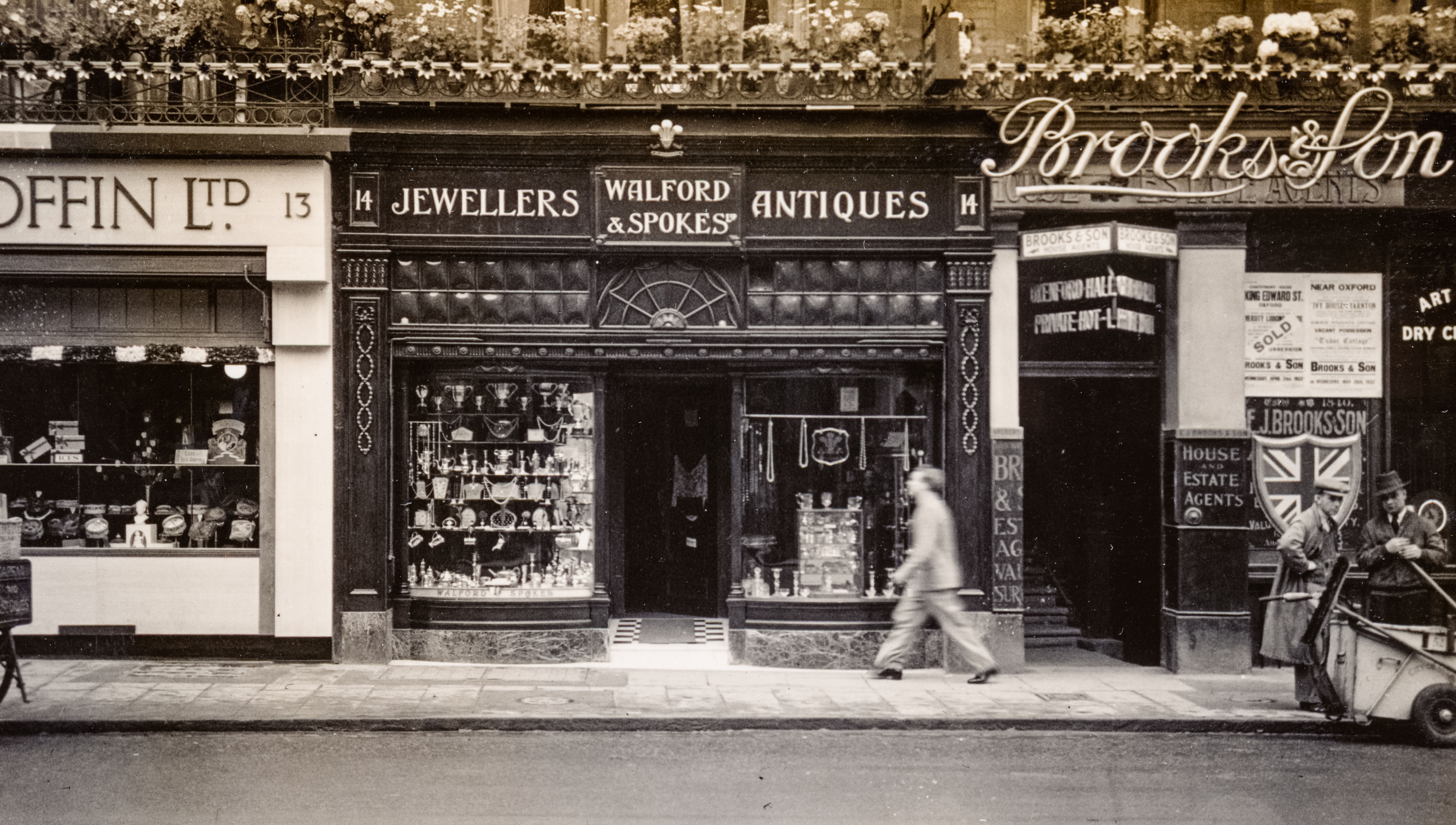
POX0550199
Walford and Spokes shop exterior, 14 Magdalen Street, Oxford, 1937
The High Street shop closed down in May 1939 and all business was transferred to the Magdalen Street site. Beatrice had photographed both shops, the High Street one with the Prince of Wales’ Feathers above the door – Walford and Spokes had held a number of Royal Warrants between 1921 and 1963. Among the many customers who did cross Walford and Spokes’ threshold was the then Poet Laureate, John Masefield. In gratitude, he would give Beatrice Vernon a signed copy of his poem, Shopping in Oxford.
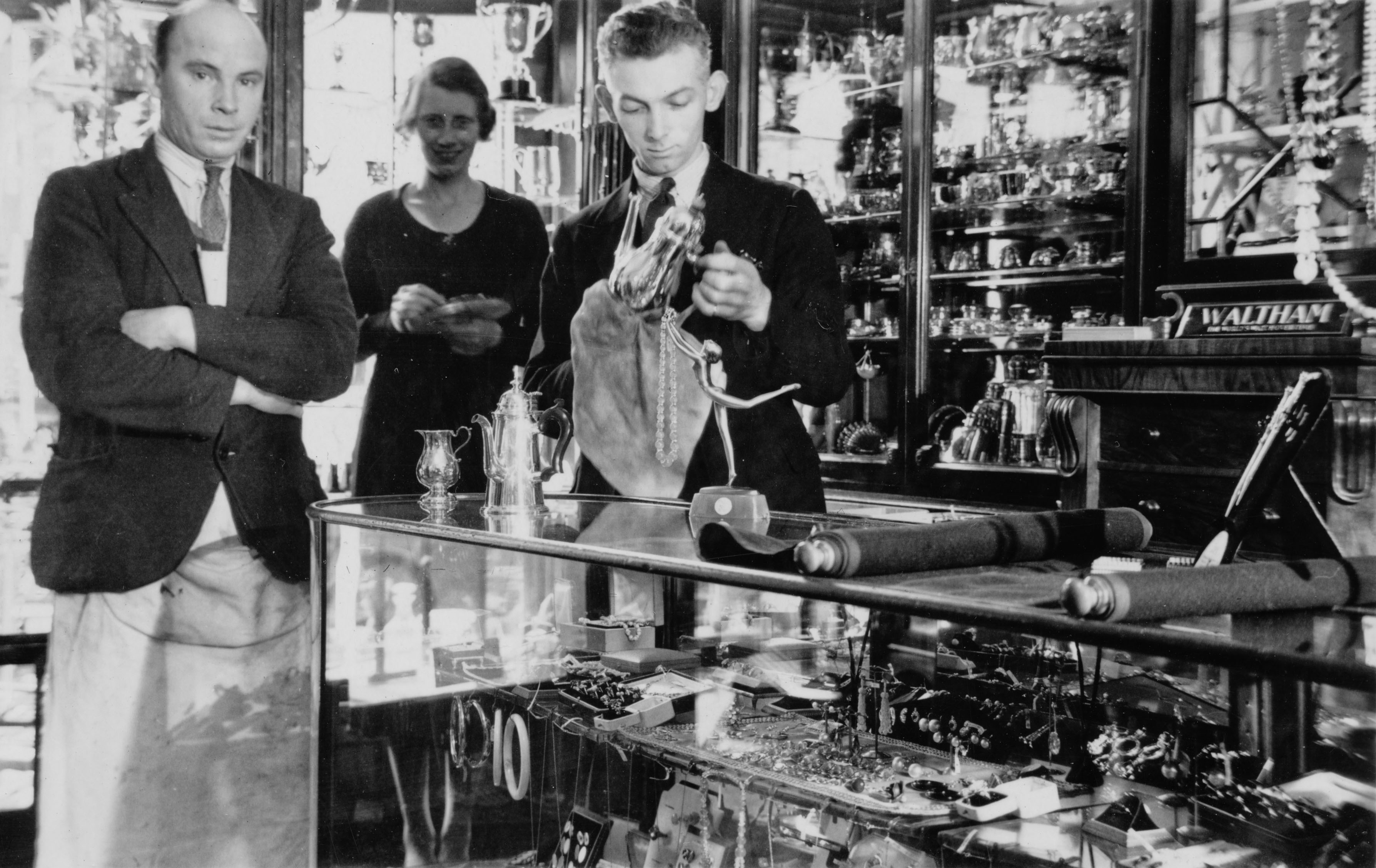
POX0550027
Interior of Walford and Spokes Ltd, jeweller's shop, 14 Magdalen Street, showing staff members Mr Davis, Beatrice Vernon and "Shrimp", November 1935
Beatrice Vernon had begun work as a jeweller’s assistant, when Walford and Spokes closed their doors for the last time in March 1964 she retired as a director of the business. It is easy to imagine how the habit of her meticulous book-keeping of her pocket money in her 1921 diary would have been of advantage in her working life. 86 and 87 High street are still there, but the 14 Magdalen Street that Beatrice Vernon knew is no more. The shop has since been demolished and replaced by a “concrete monstrosity”, as she would describe much modern architecture, with Jaeger occupying the ground floor, and more recently Five Guys burger bar.
One of her greatest regrets was in seeing how the centre of Oxford had been ‘redeveloped’ since the Second World War and comparing it with the city she knew when she first came there with its character and family run businesses that had been there for generations. Walford and Spokes would be one of these. Oxford had been fortunate to escape the bombing that had devastated so many of Britain’s cities during the Second World War. What the Luftwaffe had left untouched, the post-war ‘developers’ had accomplished.
In the 1930s Beatrice Vernon augmented her photographic equipment with the purchase of a Kodak Six-16 camera, manufactured between 1932 and 1936, and which would render her many years faithful service. Despite this, the many miles that it would have travelled with her and the many times that she would have pressed the shutter release, it is still in as good a condition as it was when she took it out of the box. Beatrice knew how to look after her photographic equipment. The only thing preventing it from being used today is that no-one makes that format of film anymore.

'Me and Camera! In the River Thames,' 29 August 1937
A rare image of Beatrice Vernon taking a photograph. The camera mounted on the tripod is her Six-16 Kodak, and she is using a cable release to minimize camera shake. Whatever she was photographing was out of shot to the left. You can almost sense her enjoyment at what she is doing.
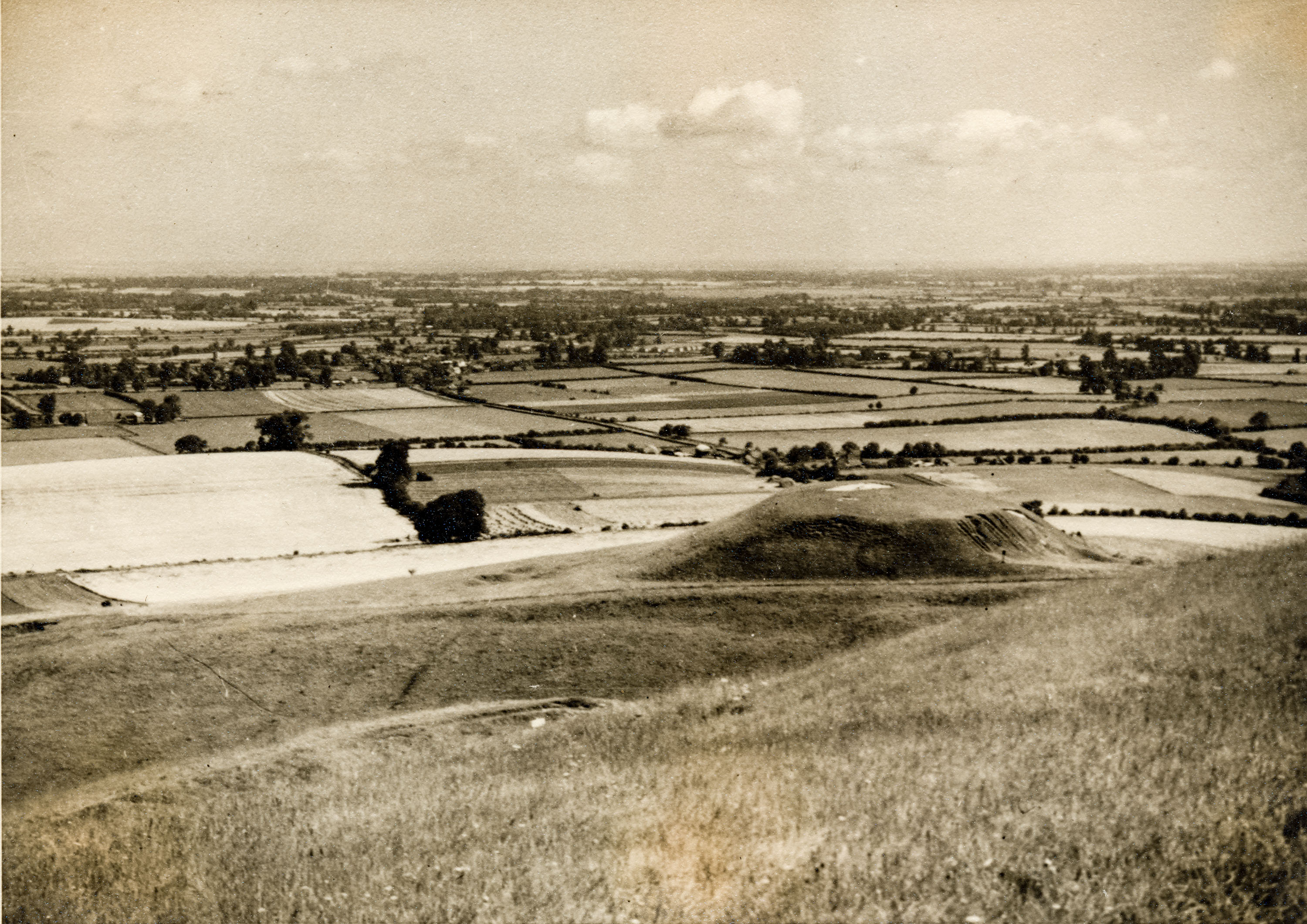
POX0550707
Dragon Hill and Uffington village, viewed from the White Horse, 1935

POX0550536
Visitors riding on Rosie the Elephant, with her keepers, at Kidlington Zoo, 1933
Among the many photographs that she took with the new camera was a record of expeditions that she and John and Jessica Agnes Spokes made. As is only possible in small, family run, businesses, a lifelong friendship developed between Beatrice Vernon and John Newcomb “Jack” and Jessica Agnes Spokes. In many of the later photographs, it is John Spokes’ car, BFC499 that is being used as the means of transport. The photograph albums contain numerous pictures of the Vernon and the Spokes families enjoying a day out or a day by the river together in John Spokes’ boat. In later years, when the now frail John Spokes was bedridden and Jessica Agnes of an advanced age and residing in The Rise, Iffley Turn, regularly, every evening, at the same time Beatrice Vernon would telephone them just to check if everything was alright of if they needed anything. These would be supplemented by weekly visits, rain or shine, to Iffley.
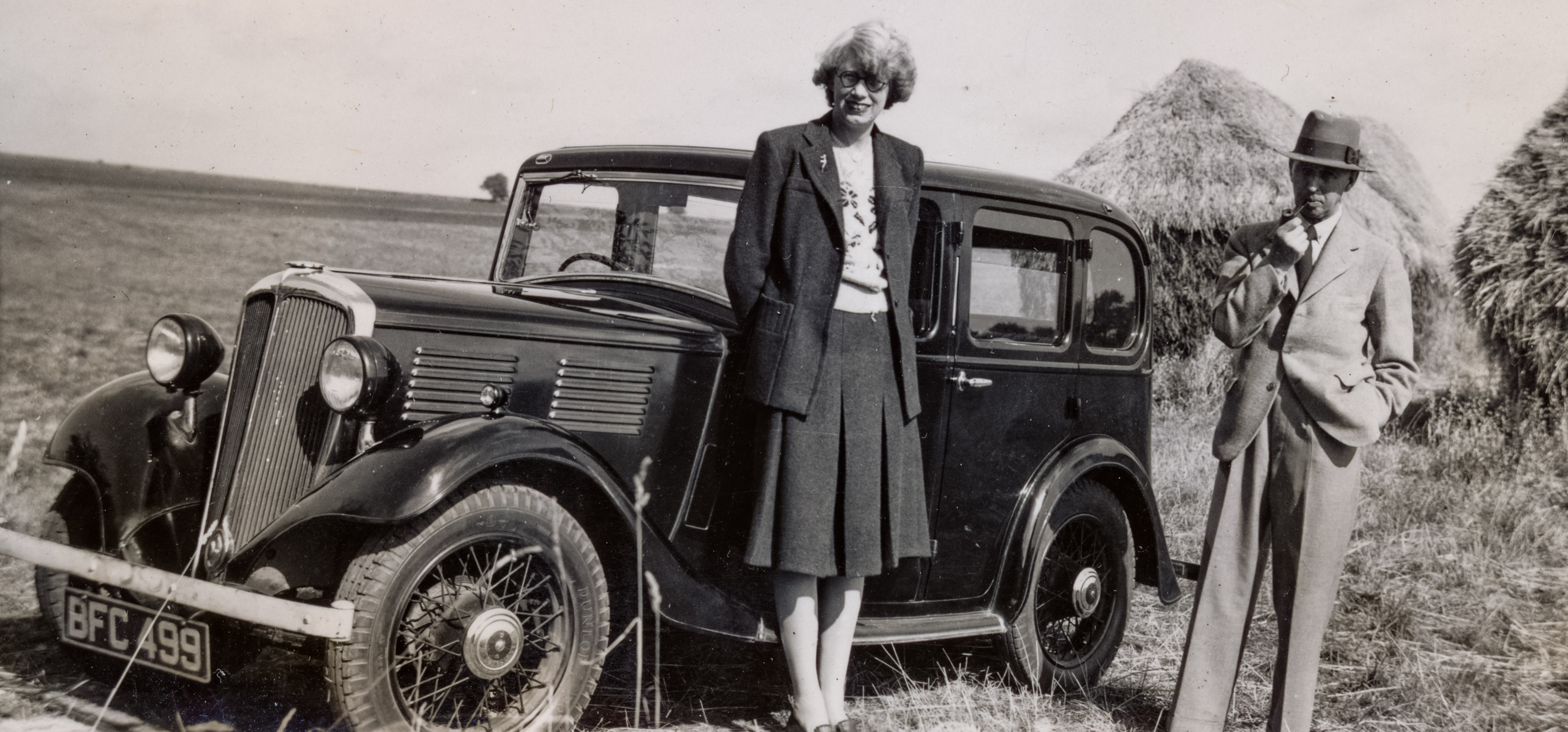
POX0550848
Beatrice Vernon and John Spokes, with his car BFC499, a Standard 9 saloon, 1945-1949
John Newcomb Spokes, who passed away on the 25th September 1975, would remember these acts of natural kindness in his will. After leaving the bulk of his estate to Jessica Agnes, his wife of many years, he added: “I bequeath the following legacies …the sum of five hundred pounds to Beatrice Ellen Vernon of 45 Beech Croft Road in recognition of her friendship loyalty and invaluable help so willingly given over the last thirty-eight years.”
Florence Kate Vernon passed away in the June quarter of 1953 and Charles Percy in the March quarter of 1960. The freeing of Beatrice from caring for two progressively aged and frail parents, in addition to the closure and demolition of Walford and Spokes in 1964, and an inheritance left to her by a relative, allowed her to remain resident at 45 Beech Croft Road. The letting of rooms to female students of Oxford University, although the subjects that most were studying were Greek to her, supplemented her income, allowed her to devote more time to her two outdoor passions of photography and visiting places of interest.
By this time there had been a further change in the photographic equipment that she used. The increased quality and availability of colour slide film led her to change from monochrome to Kodachrome and the purchase of a Voigtländer Vito-B, produced between 1954 and 1959.
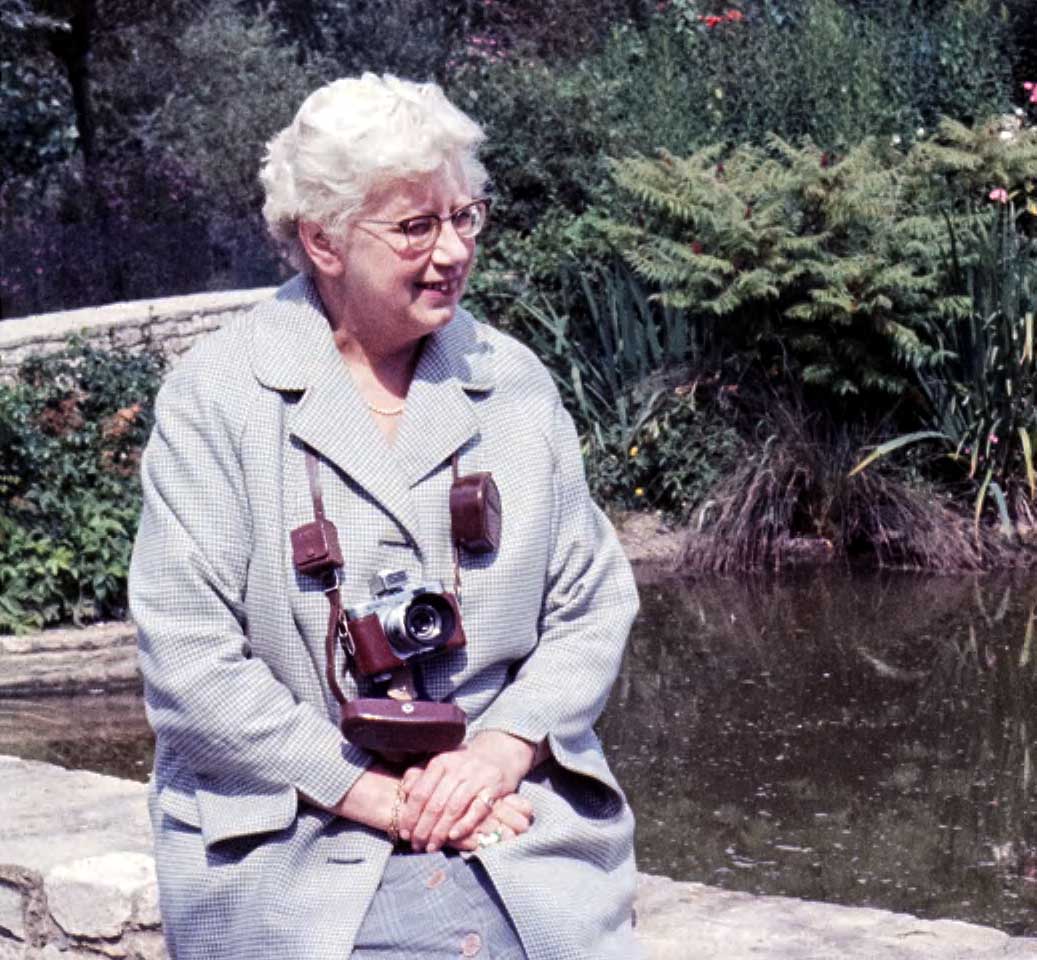
POX0553274
Beatrice Vernon taking the weight off her feet during one of her many photographic expeditions with her trusty Voightländer Vito-B, supplemented with an exposure meter and lens hood, which lived in the two pouches on the strap when not in use, August 1965.
This would lead her to another long local association, this time with J. McNeal’s photographic shop in Turl Street. Like its predecessor, Beatrice’s trusty Voigtländer is still in full pristine working order and because it uses standard 35mm film, can be used today. In due course this was supplemented by an Olympus Pen D half-frame camera that had been launched in 1962, which also used the standard 35mm film. With either of these for company, she would set out for some place of interest. Although most expeditions were local, Beatrice did venture as far afield as the Highlands of Scotland, which she enjoyed immensely, and the Cornish Peninsula.

POX0550700
17th century tithe barn at Beverstone, Gloucestershire, 1935
Her earlier expeditions, with her parents, were via the family car and would often have a theme behind them; for example: tithe barns, or churches with surviving wall paintings, or prehistoric remains, etc. In later years, when both Charles Percy and Florence Kate had passed away, and she was free of the necessity of working she would rely on public transport; either in the shape of coach trips organised by the Friends of the Ashmolean Museum, or the Oxford Architectural and Historic Society, of the Oxford Bus Company, or the National Trust, or by making her own travel arrangements.
In the front of her 1939 ‘Wellcome’ Photographic Exposure Calculator Handbook and Diary she had drawn up a list of “Places to Visit” that interested her, with a number crossed out as they were visited. The entry for the 2nd November that year notes that she took a “Walk from Wytham Mill also woods, also from Eynsham Lock.” Beatrice took a similar walk to Wytham, not recorded in the diary, in the sunny weather of Whit Sunday 1939 [ref: POX0550420]. Her diary also records the technical details of each photograph, including F-stop and length of exposure, and the subject photographed – and the fact that you could only get eight photographs on each roll of Kodak Six-16 film!

POX0550420
Renderer making hurdles at Wytham Mill, Whit Sunday, 28 May 1939
The object of Beatrice’s visit would often be researched beforehand. The research was aided by her library of volumes from Arthur Mee’s, The King’s England series, which would sit, well thumbed, with scarlet cover to scarlet cover, in her front room. These were supplemented by Pevsner’s Buildings of England volume for Oxfordshire, and her ever growing library of Batsford books, covering the British Isles and various aspects of art, architecture, rural life, natural history and anything else that had caught her interest.

POX0552836
Looking down the High Street in Burford, September 1963
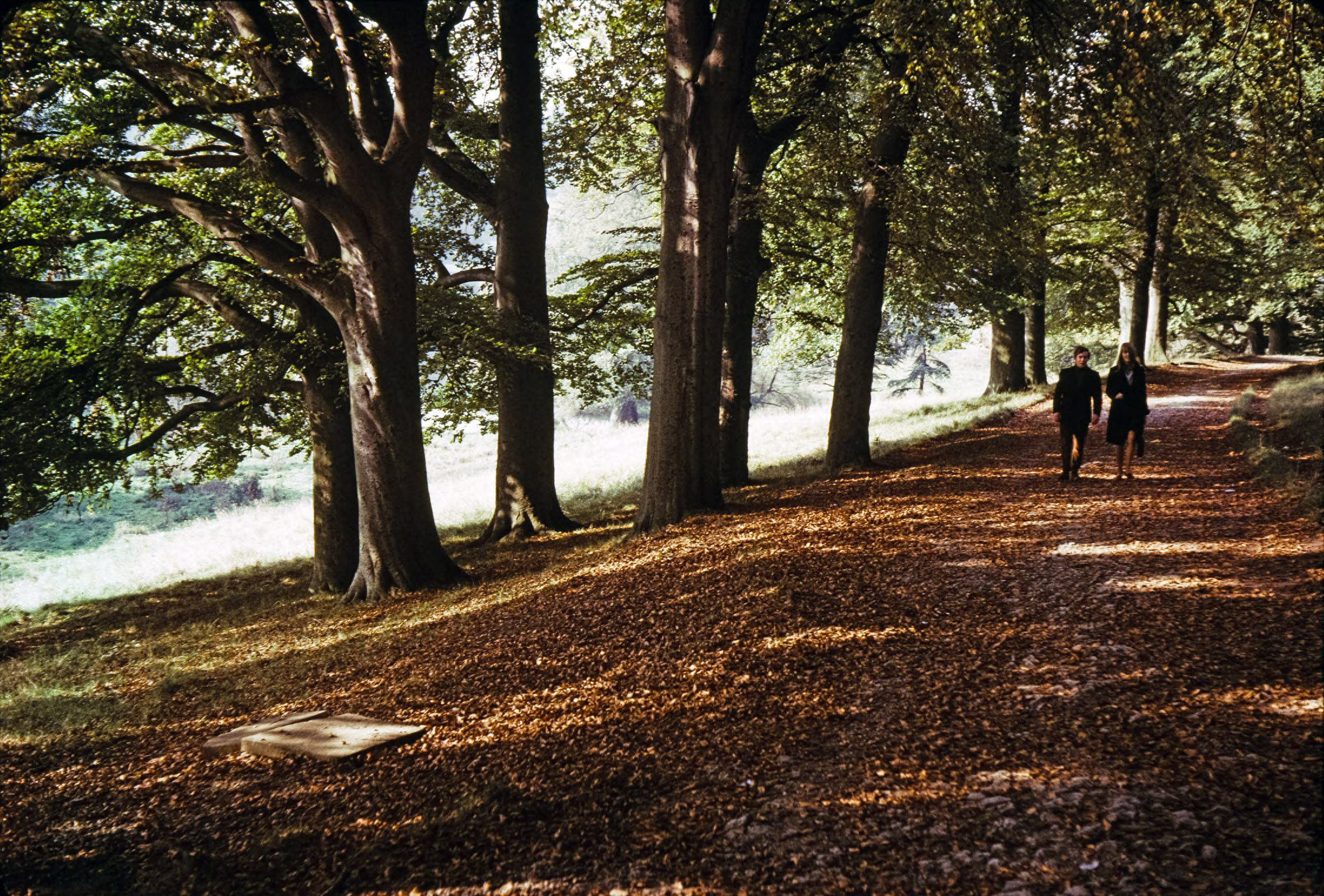
POX0553247
Dappled light and shade in Blenheim Park, November 1965
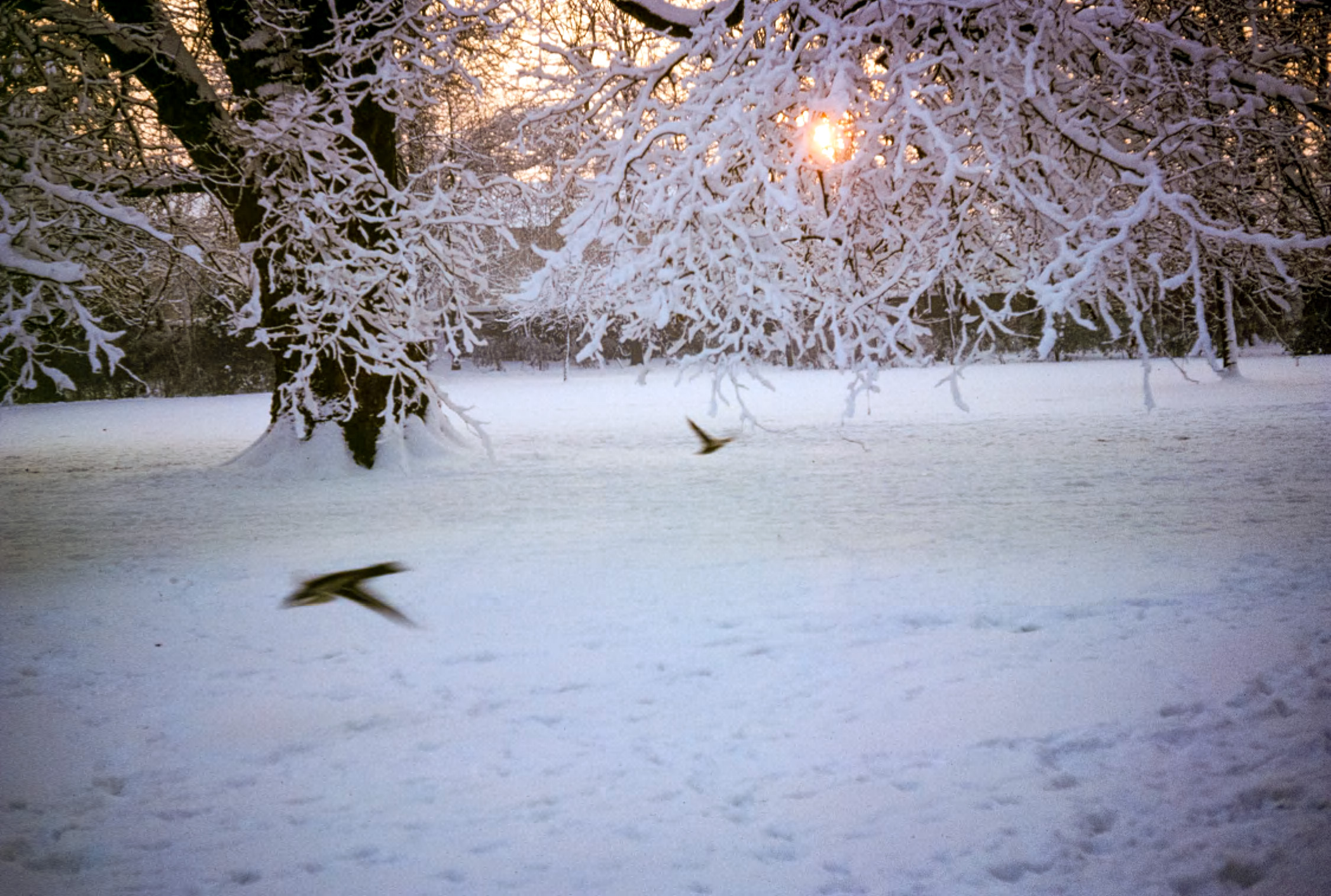
POX0552626
Not just a fair-weather photographer – a wintry landscape with setting sun (date unknown)
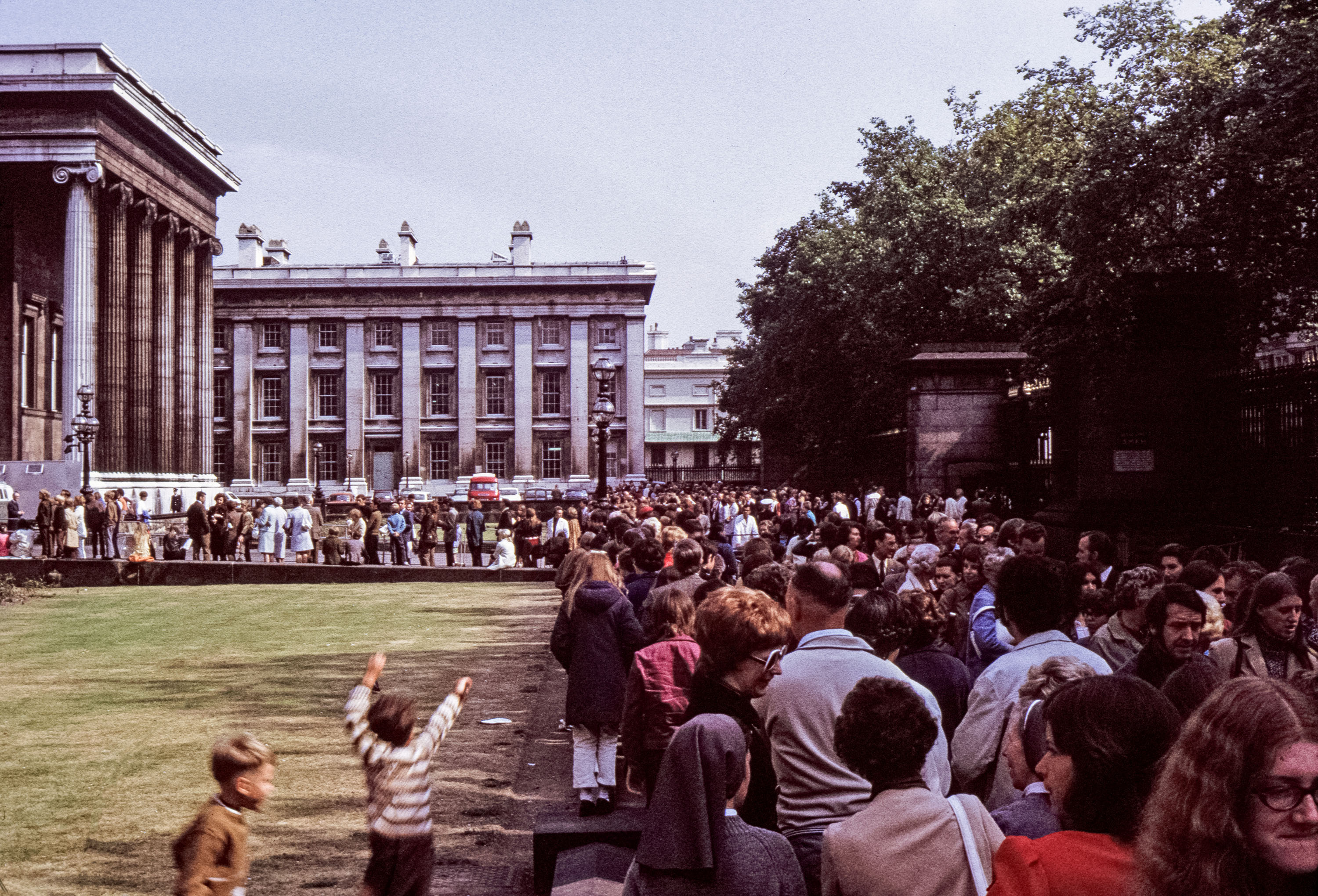
Beatrice's view of the four-hour queue to enter the British Museum for the Tutankhamun Exhibition, marking the 50th anniversary of the opening of his tomb in the Valley of the Kings, summer 1972
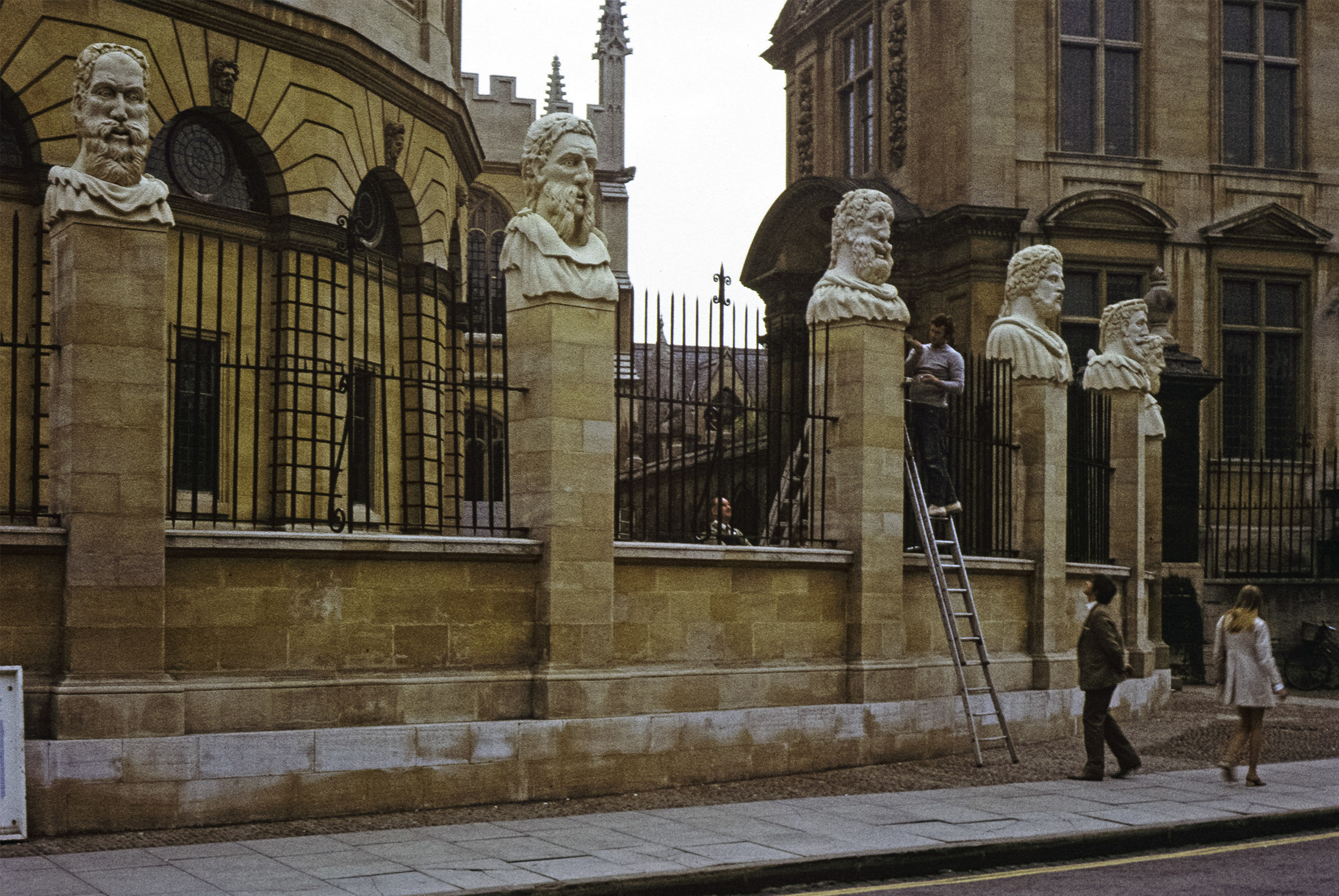
Sculptor, Michael Black, making finishing touches to the newly installed Emperors' Heads (replacing the short-lived 1860s versions), outside the Sheldonian Theatre, Broad Street, Oxford, 2nd October 1972.
Her meticulous and precise planning for another expedition extended to the preparations on the day (or the day before) itself. She would regularly be waiting ready in the hall with her coat on, with a camera and exposure meter around her neck, her “bib and tucker” as she would call it, packed lunch ready, if required, a full quarter of an hour before the scheduled start time. That said, she would often tell of how, with her slippers on her feet, she would head off down the road to capture an especially spectacular sunset over the sports fields along the Woodstock Road. She was of the firm opinion that it was the photographer that took the photograph, not the camera. That was just a tool of the trade.
What would she have made of today’s digital cameras with their multitude of buttons, dials and menus? “By the time you had finished fiddling with the camera”, she would say, “the picture you intended to take would have gone.” She was a definite supporter of the carpe diem school of photography. The return from an expedition would be accompanied by various guidebooks that would be carefully scrutinised from cover to cover, and then filed away for future reference.
Apart from her photography and her books, she was a life-long avid reader, her third passion in life was cats, Beatrice Vernon was a lifelong ailurophile, but only one ‘cat-in-residence’ at a time; there could only be one “Lord and Master of All That I Survey” as she would call him, at any given moment. It is not surprising, therefore, to find that among the first of the Abwell farm animals that she photographed and included in the album in 1922 was Snipe. Snipe was the first of a succession of cats, culminating in Benji, to have their likeness recorded and there are a couple of albums and numerous transparencies devoted entirely to cat photographs.
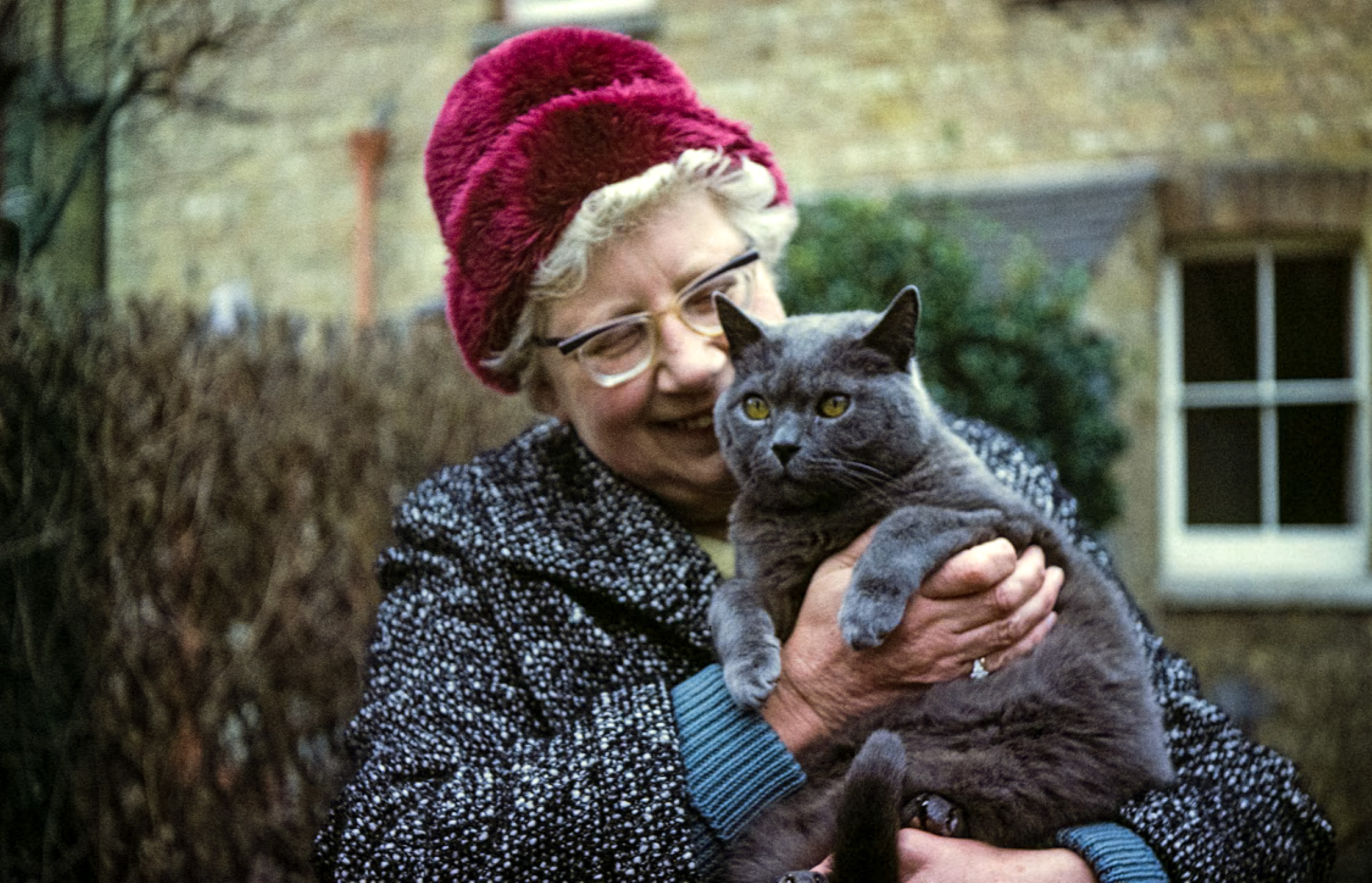
POX0553733
With Jason in the back garden of 45 Beech Croft Road, Beatrice’s home for more than half a century, April 1968
They were a motley bunch ranging from Jason who was a pure pedigree, cat show champion standard, British Blue, and he behaved as if he knew it; to his immediate successor, Niki, a re-homed tabby stray of whose descent and parentage nothing was known except that there must have been a tom and a queen. When Benji, her last cat, died, he was not replaced; she felt that at her age she would not be able to care for another cat properly. For the first time in very many decades, she was without a feline companion.

POX0553080
Beatrice in the rockery of St John’s College Garden, April 1965 - a favourite place to visit during her lunch break when working at Walford and Spokes
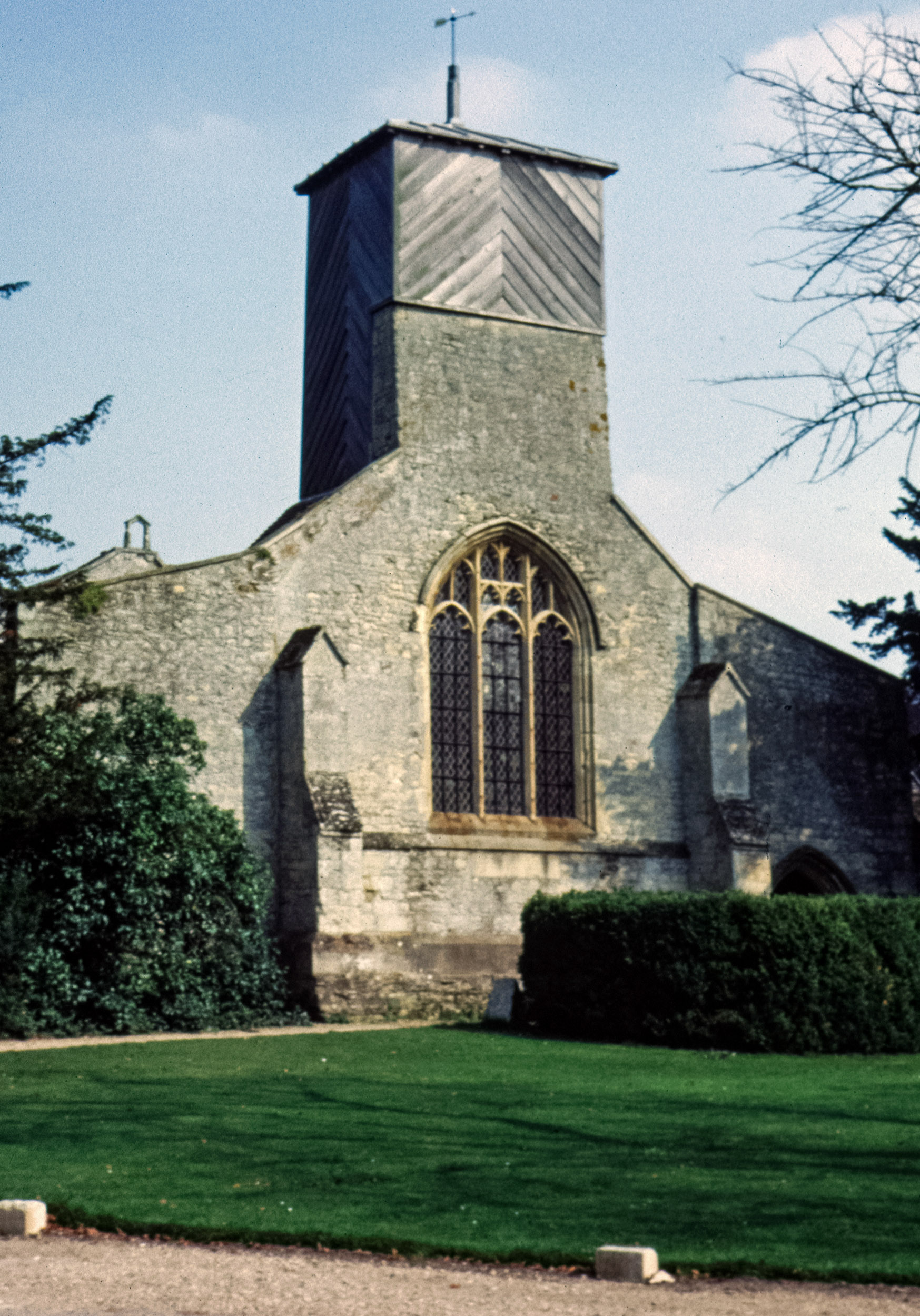
West front of the Church of St Mary the Virgin at Waterperry, which Beatrice visited with the Oxfordshire Historic Churches Trust, February 1983
Sadly, during the latter 1980s and early 1990s the years began to catch up on Beatrice Vernon. The excursions, courtesy of the Oxford Bus Company, National Trust or the Friends of the Ashmolean Museum became less frequent until even visits to her two-favourite old “stamping grounds”, Oxford’s Botanic Gardens, and the Ashmolean Museum as well as the innumerable visits that she had made to Oxford’s colleges, were beyond her. Her legs had lost their strength and her eyes, that had seen and recorded such beauty for more than half a century in thousands of photographs and which had explored the world through the innumerable writings of a multitude of authors, that had peered into the crystalline beauty of many a gemstone, lost their clarity. In the end, virtually house-bound and with impaired vision, she only had her wireless and her memories, her thoughts and the snatches of poetry and prose that she had remembered from her many years to recall.
Beatrice Ellen Vernon, the gentlest and kindest of souls who touched and enriched so many lives, both human and feline, with her love and generosity of spirit, passed away on the 9th of September 1995 at the Beaumont Nursing Home on Boar’s Hill. She had been moved there the previous spring after a spell in the Radcliffe Infirmary on the Woodstock Road, when it was felt that she could no longer return to her home of almost sixty years – this too, 45 Beech Croft Road, like all the other things of her younger years, was taken away from her.
She would often say that when she passed away, she expected to be greeted in heaven by a guard of honour formed by all the cats that she was honoured to serve during her life, all lined up to greet her. She would wonder which one would be at the head of the queue. The Funeral Service was at St Andrew’s Church, Linton Road on the 15th of September. She was a firm believer in the old Prayer Book, this was what she had been brought up using, had used all her life, and saw no sense in changing at her time of life. In accordance with her wishes, her earthly remains were cremated, she did not relish the prospect of being eaten up by worms after death. Her ashes were interred with those of her parents, Charles Percy and Florence Kate Vernon in the Memorial Garden at Oxford Crematorium.
To end with one of Beatrice Vernon’s favourite sayings, “that is sufficient, any more would be a superfluity.”
Posted by: Marek Lewandowski, photographic volunteer, Oxfordshire History Centre