
Interior of Oxfordshire County Council Education Department offices (Macclesfield House), Tidmarsh Lane, Oxford, c.1910-19
29 September 2020
The 1902 Balfour Education Act transferred the management of elementary and secondary schools from the school boards that were established by the 1870 Education Act to the County and Borough Councils. As a result of the Balfour Act, approximately 235 schools (excluding Oxford City Schools) moved under Oxfordshire County Council’s control. In order to prioritise repairs and any necessary changes to the schools, a detailed inspection of each school was needed. Percy Elford (1867-1950), the Chief Education Officer and a keen early motorist and photographer, was deemed perfectly placed to travel the County to complete this daunting survey of Oxfordshire’s schools.
Percy Elford was born in Exeter in 1867. He attended Exeter Grammar School before winning a scholarship to Christ Church College to study natural sciences, specialising in Chemistry. After graduating with a First from Christ Church, he worked as a lecturer for both Shropshire County Council and the University College, Reading. He returned to Oxford as Fellow of St. John’s College (1892-1906) and lecturer in Chemistry (1892-1907). Alongside his burgeoning career with the University he also formed an association with Oxfordshire County Council and for a while managed both careers concurrently. He was organising secretary of the County Council Technical Instruction Committee before being appointed Chief Education Officer in 1903.
As Chief Education Officer, Elford was given a starting salary of £600 a year plus travelling and office expenses and a small staff of eight who were based at Macclesfield House (the long-time home of the education department). From the outset, Elford and his team were under constant pressure to inspect schools as quickly and thoroughly as possible and Elford sent a constant barrage of questions and queries to schools before and after his visit. Some of these handwritten notes and lists of questions written by Elford can be found in the collection.
Interior of Oxfordshire County Council Education Department offices (Macclesfield House), Tidmarsh Lane, Oxford, c.1910-19
Elford had a keen interest in gardening and in his capacity as Education Officer and as a garden instructor, regularly visited the schools to judge gardening competitions and helped judge the Education Committee’s trial allotment scheme. Filkins log book reports a visit in June 1908, ‘ Mr. P Elford, secretary to the Oxford Education committee and gardening instructor, inspected the work the Gardening class’.
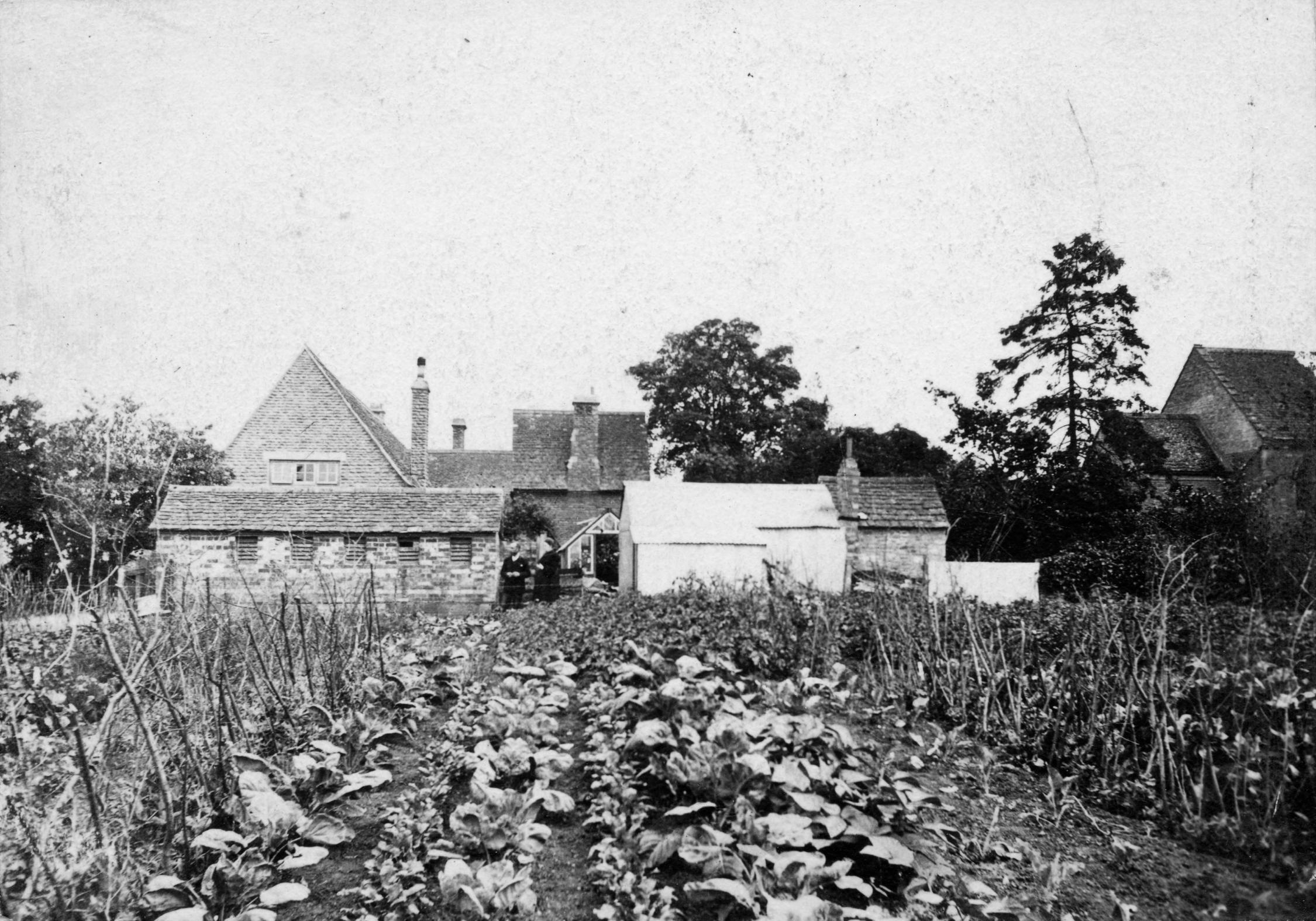
Aston with Cote, Bampton Aston Church of England School- trial allotment and garden, 8 July 1905

Kidmore End Church of England School - teacher and boys pose in front of the shed, in the school garden, c.1903-13
Elford would go on to later publish several books on practical gardening and allotment management with Sam Heaton. [Practical School Gardening (1909), Cultivation of allotments (1917)]. The inclusion on the curriculum of more practical subjects such as gardening were encouraged at this time and culminated in the recommendations of the 1913 Acland report that the curriculum should include more ‘learning by doing’. However, the place of gardening on the curriculum was controversial as a review of his first book shows, reminding Elford that ‘education must be in the first place, literary.’ (The Spectator, Jul 31, 1909).

Title pages of contemporary council reports on school gardens and allotments
Percy Elford retired from the County Council through ill health in 1920 but went on to teach as Senior Science Master in Redcar and then Dover College, Kent. There is also a tantalising possibility (if correct) that Elford’s achievements could have been even more impressive. In a letter to David Elford in 1949, he claims that he was a month away from discovering Argon in 1895, before having to end his research to take up a teaching appointment in Shropshire.
Unlike the schools he so meticulously documented, Elford himself remains strangely elusive in the archive collection he created. His absence from the thousands of school images is of course a necessary one as the photographer, although there are rare sights of his discarded hat or coat in some photographs. He appears fleetingly in Filkins school log book which records his visit in January 1906, ‘Mr. Elford visiting the school taking measures and photographing’.
However, the only image of him seems to be a hand drawn sketch in Shrimpton's Oxford Caricatures, from his time at St John's College, that shows him smoking a pipe and holding a small case and what appears to be a camera stand or shooting stick. However elusive his personal presence, his achievements are clear to see, none more so than in the results of his extraordinary school survey.
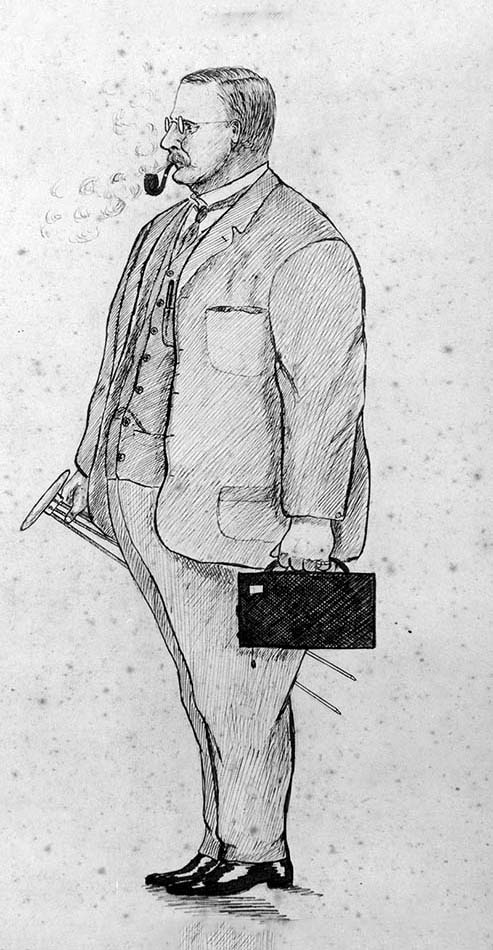
Percy Elford caricature, c. 1897
Percy Elford’s approach to the Oxfordshire School survey was by his nature an investigative and methodical one and can be seen in the sheer volume of data and photographs he collected. In order to organize and standardize the information for each school, Elford created a colour coded index card system, filling six wooden catalogue drawers, which remain the heart of the collection today. The index cards reflected every aspect of a school including financial summaries, site maps and building plans, inspections notes, Board of Education reports, attendance figures, insurance details, lists of staff, furniture and equipment and copies of key documents and press cutting relating to the school.
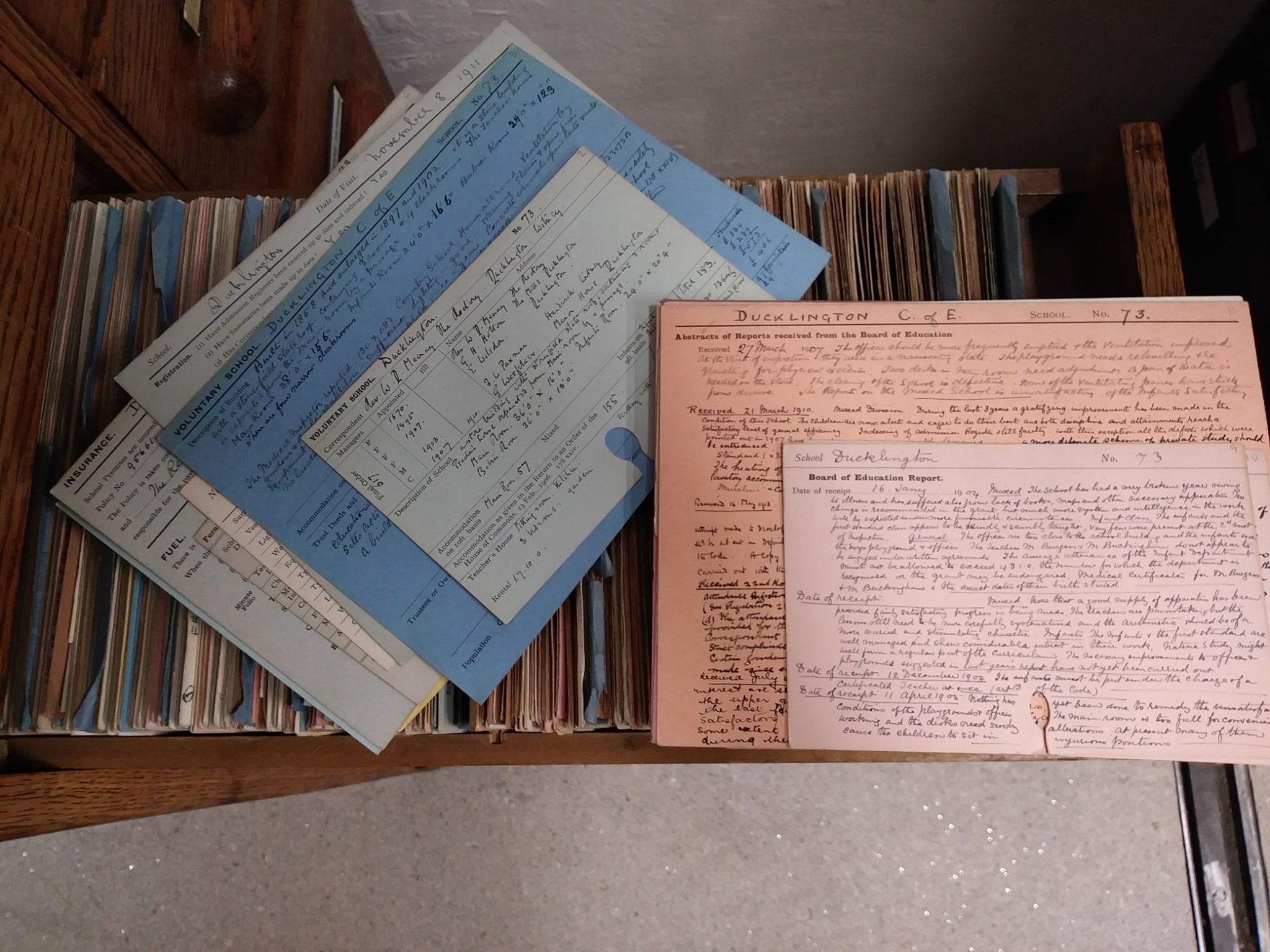
Macclesfield House Collection index drawer, with colour-coded cards

Henley-on-Thames non-demoninational (British) School: ground plan and elevations of proposed anthracite stove in Infants room, c. 1910-19
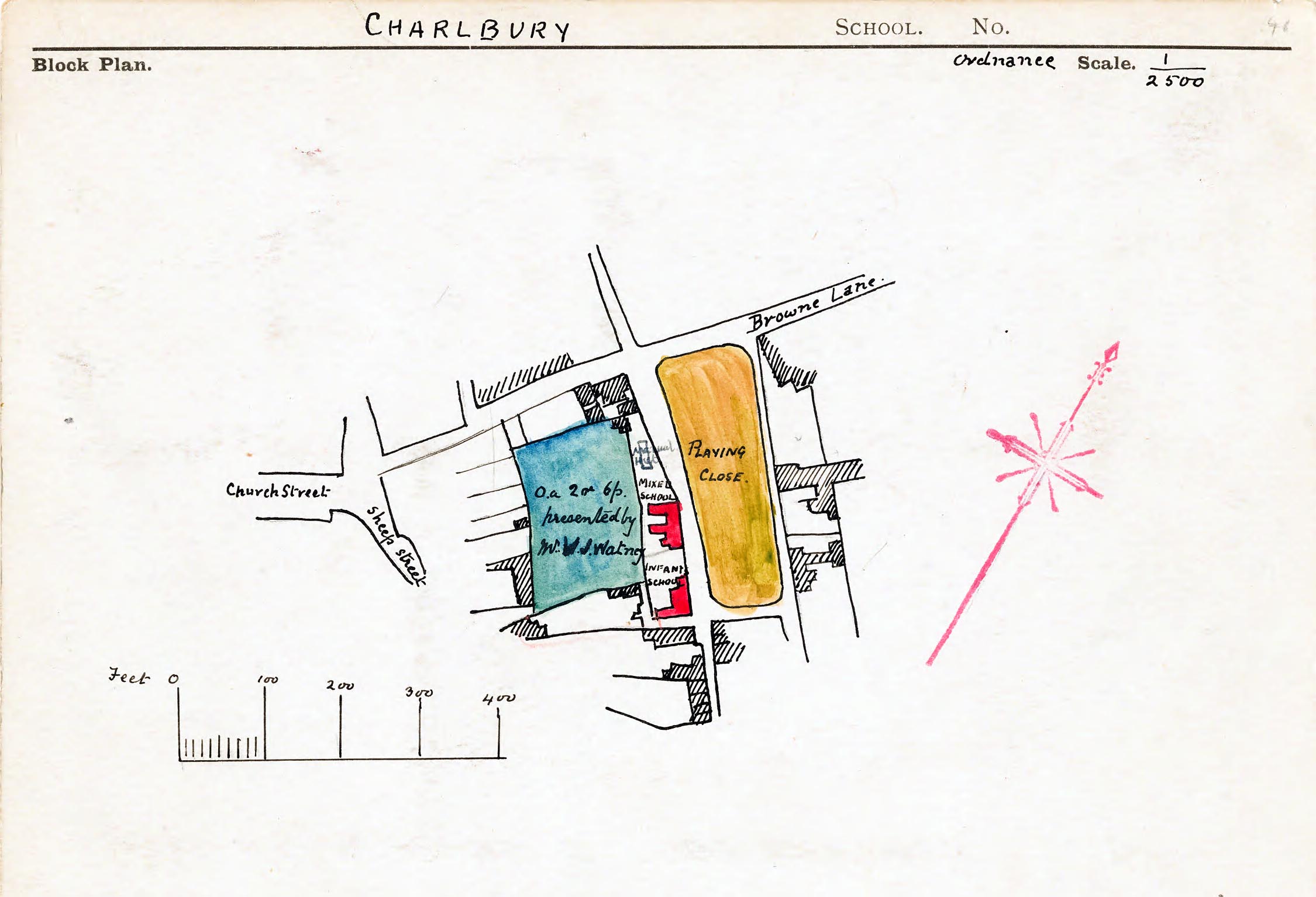
Charlbury Council School site plan, c. 1910-19
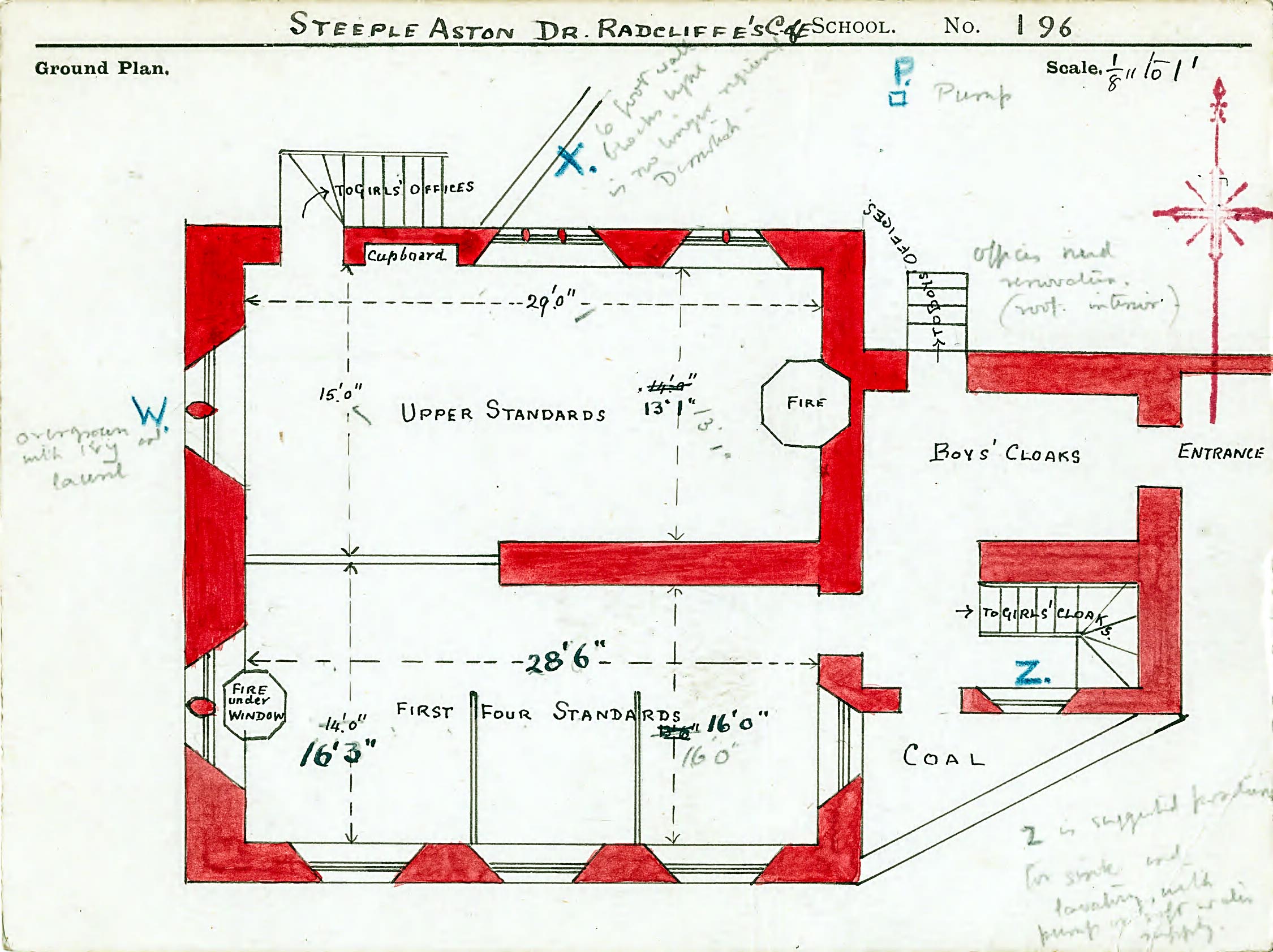
Ground plan of Dr Radcliffe's Junior Voluntary School, Steeple Aston, c. 1910-19
At the end of the collection you can see that Elford used this precious data to draw wider conclusions about teaching standards, financial burdens and prospect of school closures, in a set of detailed comparative graphs and tables (OHC ref: CC4/276). Copies of these graphs can also be seen covering Elford’s office in Macclesfield House.

Elford’s office in Macclesfield House (Oxfordshire County Council Education Department), Tidmarsh Lane, Oxford
Elford’s interest in gardening is reflected in the inclusion, on many of the index cards, of detailed drawings of the school garden or allotment with the different crops, their yield and the yearly rainfall. There is even a whole section dedicated to the rainfall on Bodicote House in Banbury, spanning twenty years (OHC ref: CC4/277)
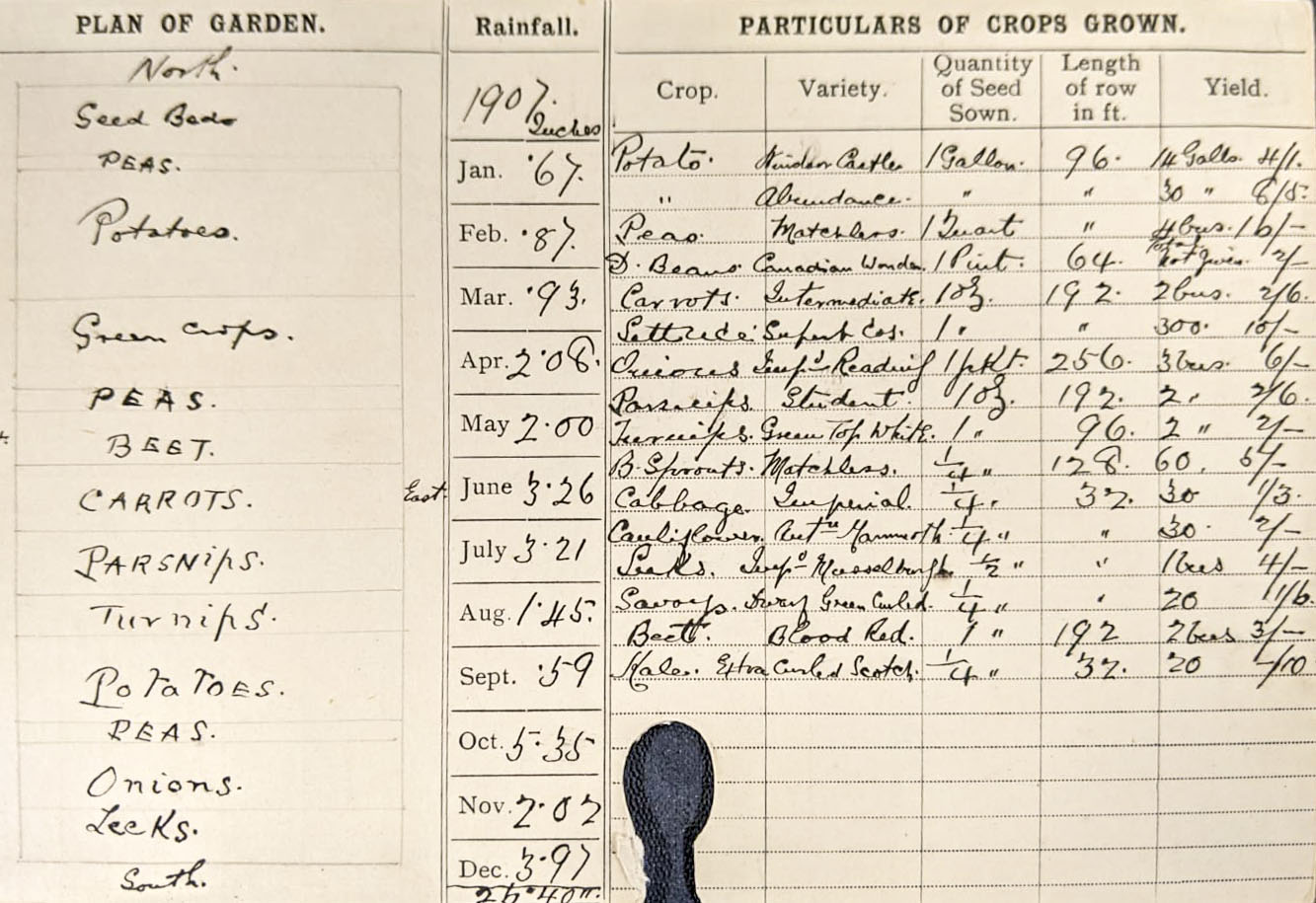
Index card with record of crops grown and rainfall at Bodicote House, near Banbury, in 1907
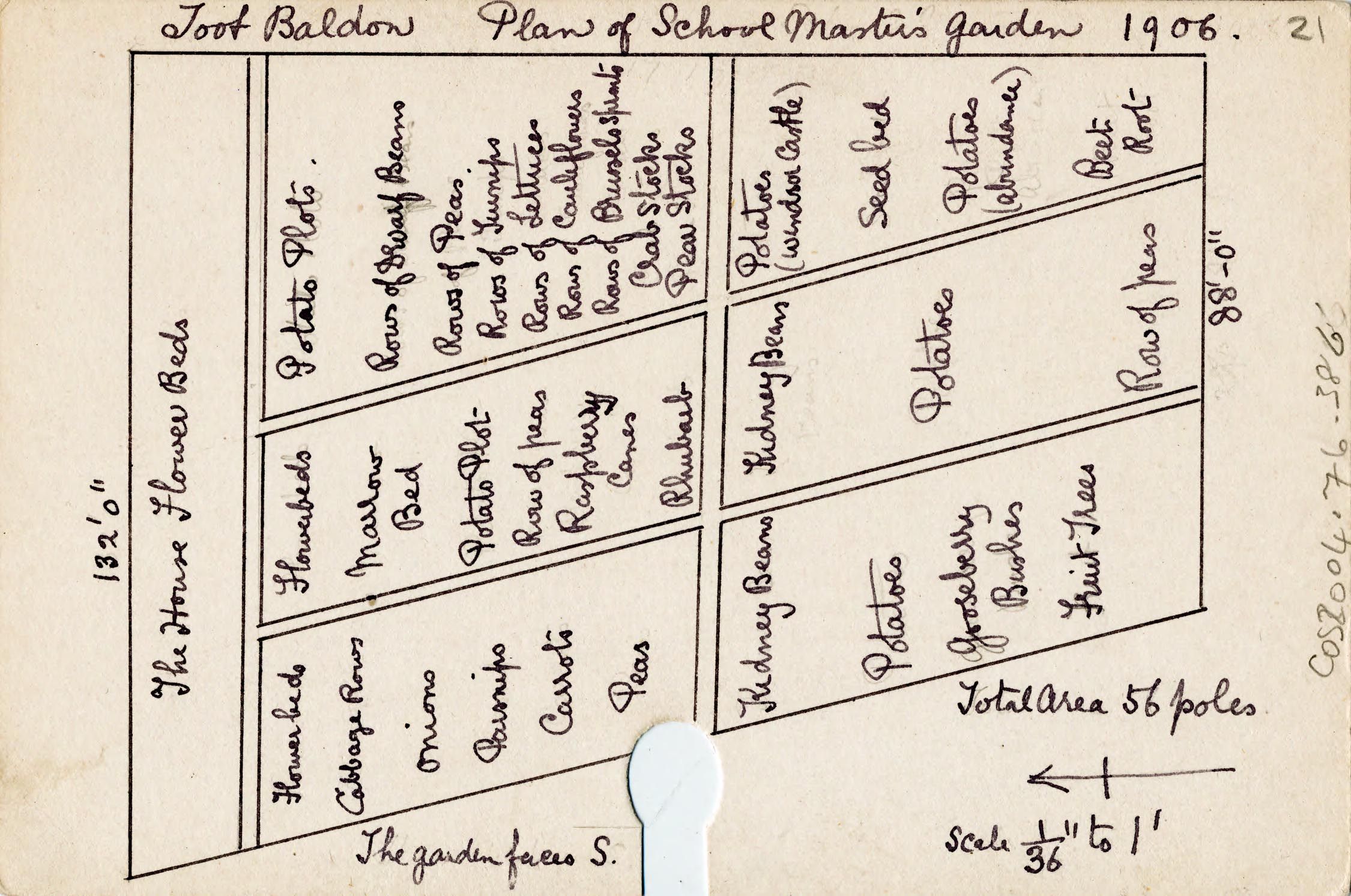
Toot Baldon School: plan of flower beds and vegetable crops in schoolmaster's garden, 1906
Although Elford himself rarely appears in the collection, his car is an almost constant presence in the photographs. The car often appears on the road outside the schools he is inspecting but sometimes it can be spied on a hillside in the distance or a bumper or headlight in the corner of a shot.

Percy Elford's car, parked outside Ipsden Church of England School, 26 June 1905

Girls at Burcote Church of England School hang over the gate, looking at Elford's car, 5 July 1905
The car, possibly a Humber, has an early Oxfordshire registration (BW265) which indicates that it was likely registered between 1903 and 1904. The motor tax record (OHC ref: MTIII/I) reveals a little of the car’s life after the time spent with Elford touring the County’s schools. After Elford, the car was sold to A. W. Hall of Barton Abbey, Steeple Aston and then to a company in Leamington Spa, before the registration was cancelled in 1933.
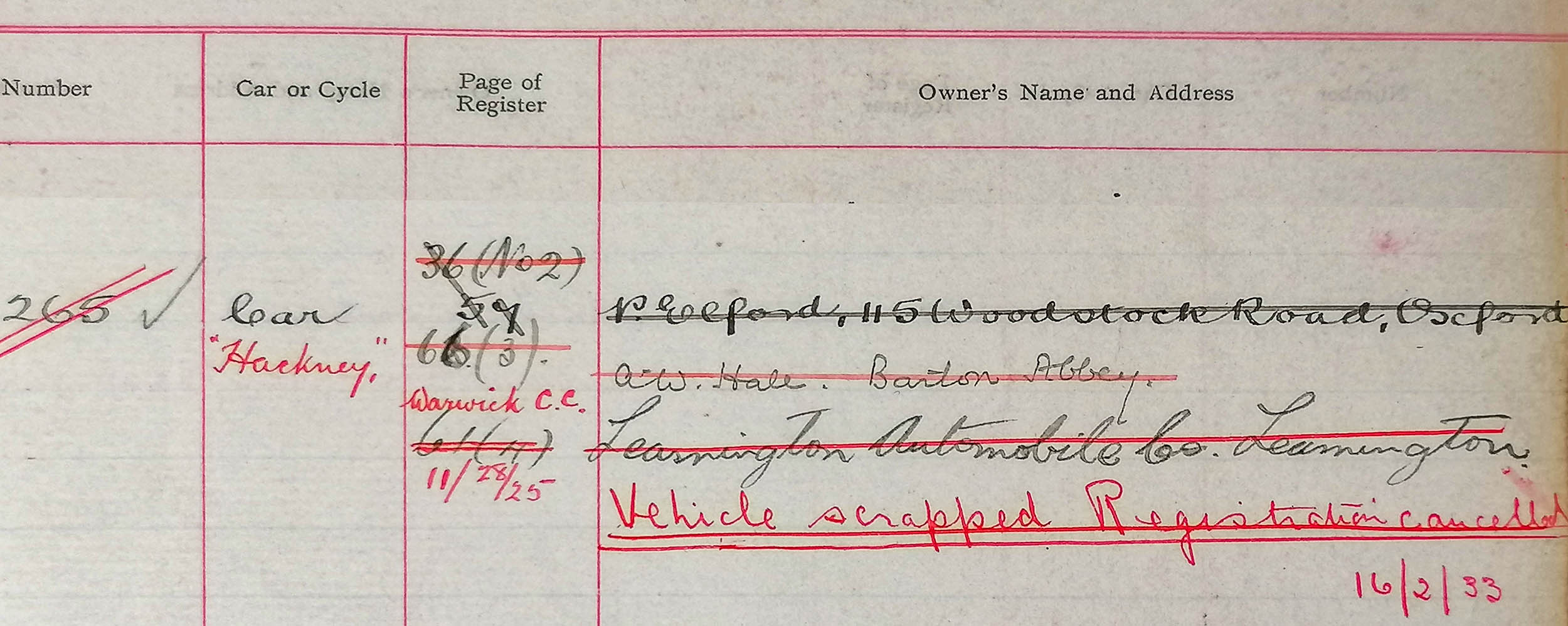
Oxfordshire motor tax record for Elford's car, registration BW265
Initially the novelty of having to calculate travelling expenses for Elford’s car caused some problems for the council. However, taking into account any depreciation value of the car, they settled on a mileage allowance of 1/- (5p) a mile up to £120 per year.
The collection remained a vital administrative tool for the education department and was maintained and updated for a number of years after and includes Grammar Schools that were transferred to the County's care in the 1920s. It was deposited at the Oxfordshire History Centre in 1994. Initial work on the collection included removing ‘offensive material’ such as pins, union tags, post it notes, aswell as ‘a Kit Kat wrapper and a rather unhappy looking Owbridges throat lozenge of uncertain vintage’.
In 2017 staff and volunteers focused on transforming the six heavy wooden drawers of index cards into a searchable, accessible catalogue. This involved the sorting, numbering, listing and cataloguing of over 7000 index cards and scanning nearly 1800 original images and plans produced by Elford. The Macclesfield House collection (OHC ref: CC4) can be viewed on our online catalogue Heritage Search and there are links to the items that have been digitised in each catalogue entry.
One of the great joys of the collection is the photographs, numbering over three thousand, that Elford took during the survey. These images were initially intended as a visual record of any repairs or alterations needed for the school but became a fascinating insight into the lives of the children and teachers. The majority of these photographs date from 1903 but there are some as early as 1901. They record every school down to the smallest detail including pictures of coat hooks, cracks in walls and numerous images of toilet facilities or ‘offices’ as Elford recorded them. He visited some schools when they were closed and empty but there are many more photographs showing the children at work and play.

The girls and boys of Stanton St John Church of England School, posed for a group photo with their teacher, 15 January 1906
The vast majority of the prints that Elford pasted down on to the cards were of good quality, especially if the objects were static but many of them featuring classes at work are badly blurred due to movement during long exposure times. However, you can see through the collection how as a keen amateur photographer, Elford strived to get better, often duplicating and repasting images for the survey.
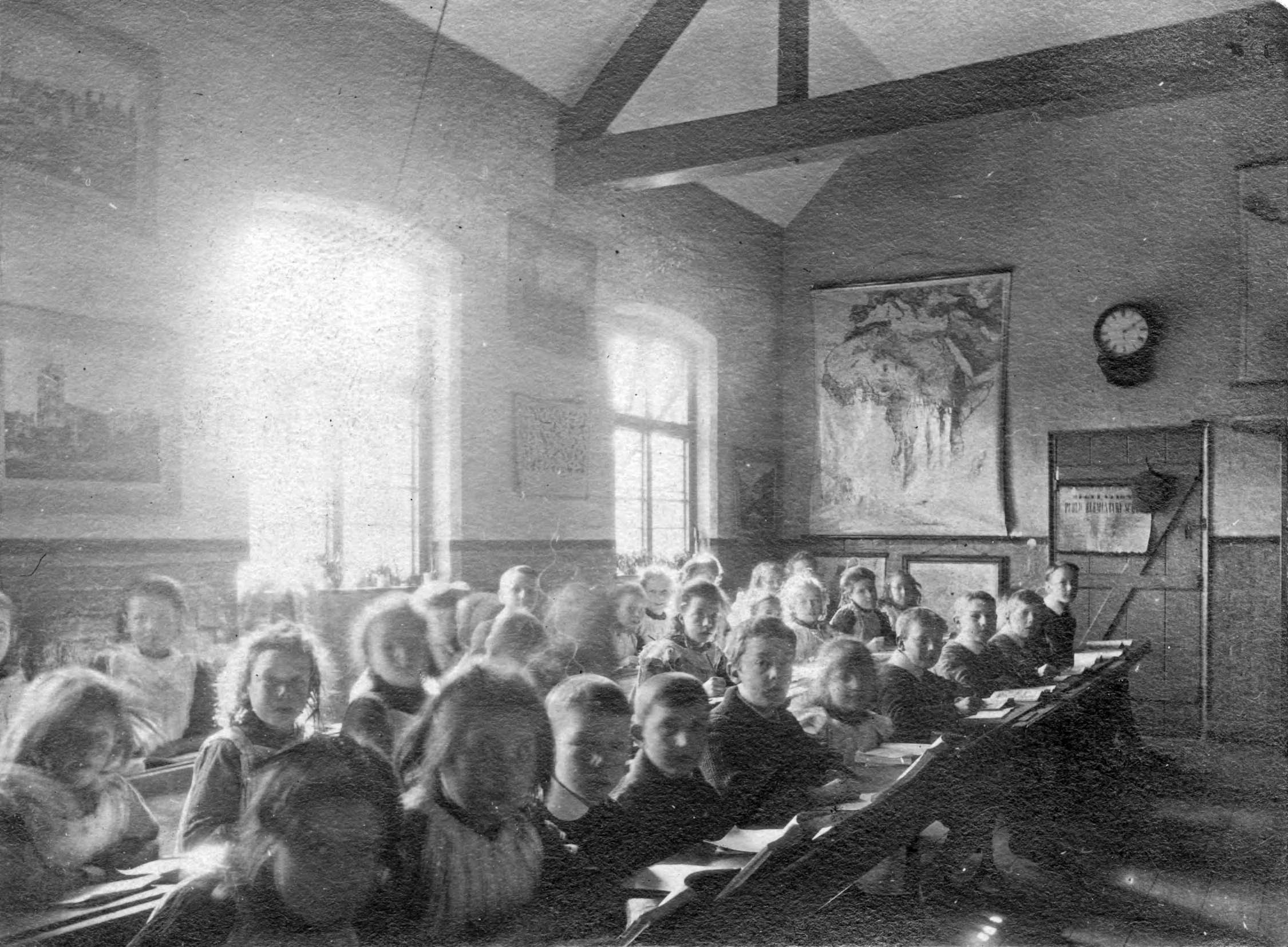
Ipsden Church of England School - classroom interior, 19 March 19072
The collection even makes a self-referential nod to its own origins with a set of photographs of the construction of the New County Offices at Macclesfield House (OHC ref: CC4/274)
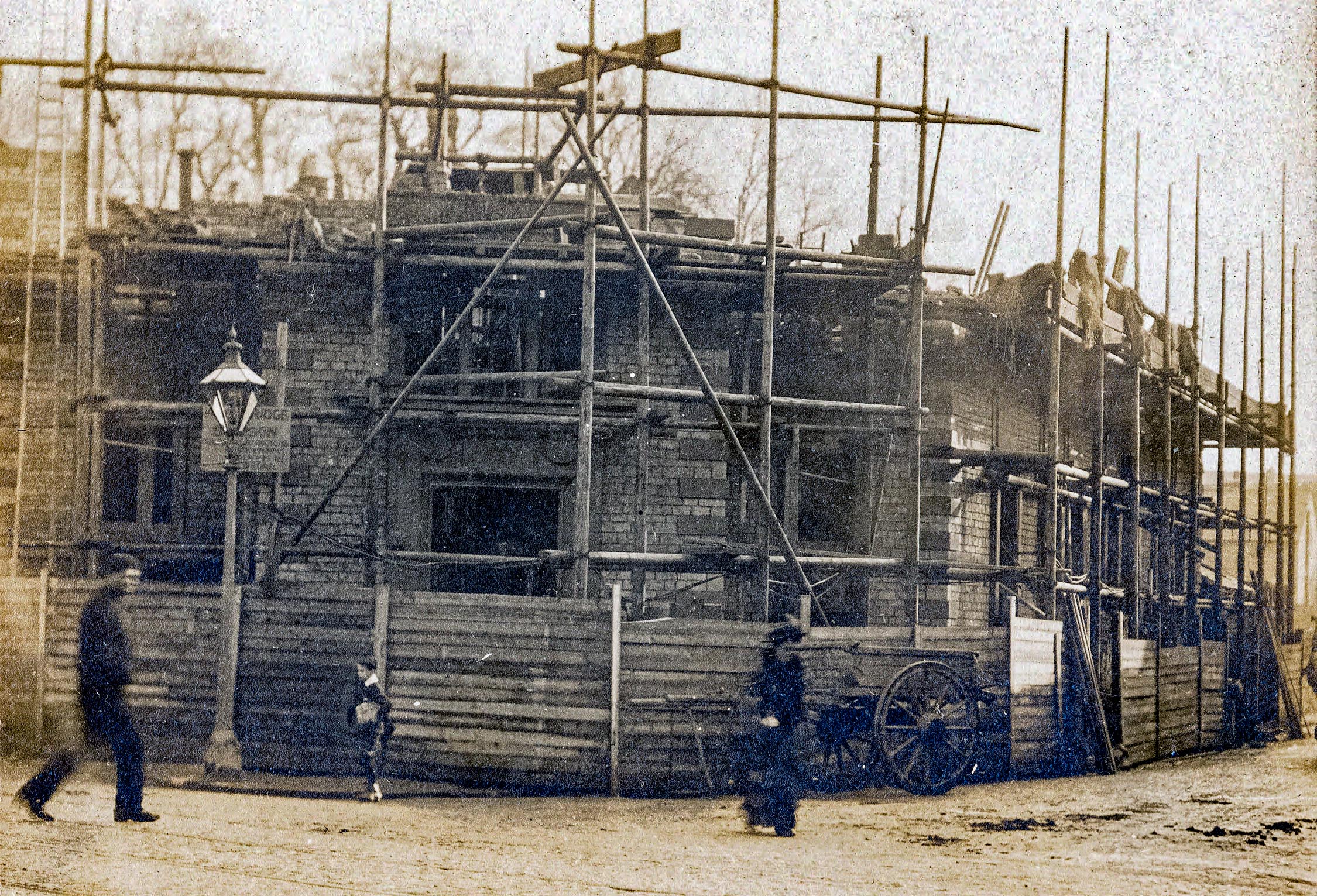
Construction of Oxfordshire County Council Education Department offices (Macclesfield House), Tidmarsh Lane, Oxford, 25 January 1912
As part of the digitisation project a further 1800 unscanned originals were edited and scanned and the whole collection can be viewed on Picture Oxon.
The collection is not only a valuable resource for local and family historians but also a glimpse into the wider changing trends and attitudes in education during this period. The early years of the 20th Century saw a shift towards increased concern for children’s health and mental stimulation and there was a radical shift in school building planning with the emphasis placed on light and ventilation.
There was a major conference on school hygiene in 1904 and further legislation from the Board of Health in 1907 that led to regular medical inspections and other provisions in schools. There was also a tentative move away from what Edward Holmes, the retiring Chief Inspector of the board of education called, ‘blind, passive, mechanical obedience in the classroom’, towards a more progressive form of education. Many of these changes are reflected in the Macclesfield House Collection and link the changing fortunes of individual schools to the wider educational concerns of the time.
Posted by: Becky Hogben, History Assistant, Oxfordshire History Centre